
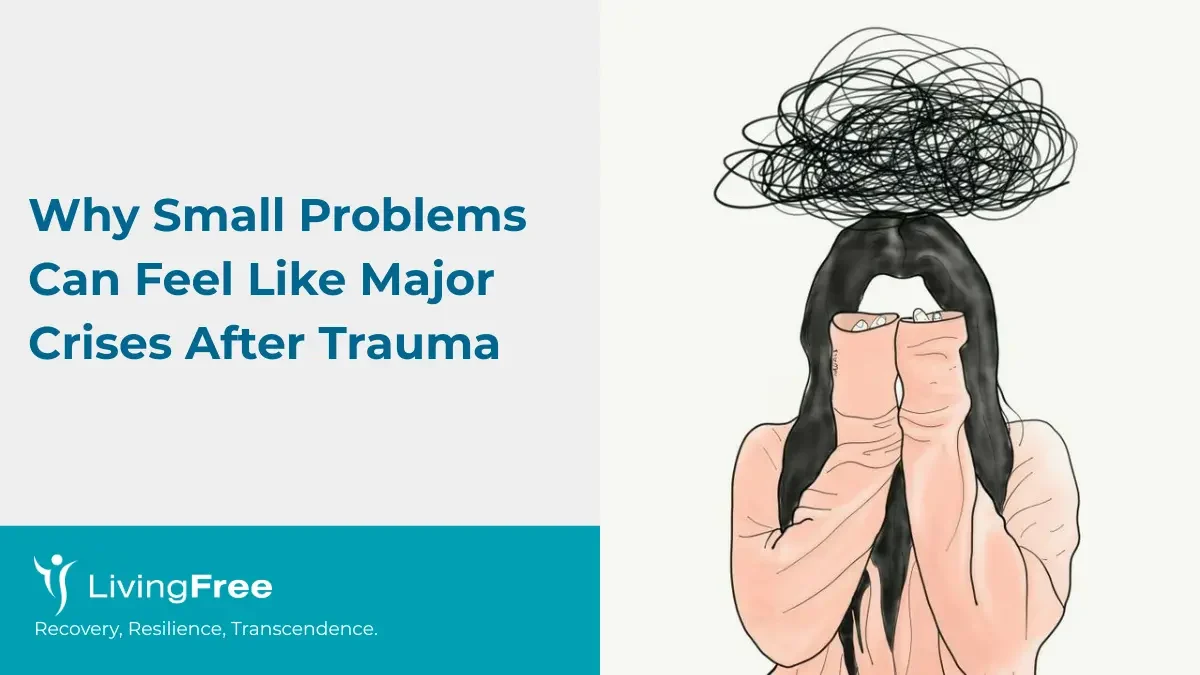
A missed text message. A form that needs filling out. A minor disagreement with a partner. For most people, these moments pass without much notice. For someone carrying unresolved trauma, the same small events can trigger a wave of panic, dread, or shutdown that feels wildly out of proportion to what actually happened. If you have ever felt confused or ashamed by your own reaction to something “small,” you are not broken and you are not overreacting on purpose. There is a well documented biological reason this happens, and understanding it is often the first step toward feeling less at the mercy of it.
Table of Contents
It Is Not Really About the Small Thing
One of the most important things to understand about post-trauma reactivity is that the nervous system rarely responds only to what is happening right now. It is also responding to what similar moments meant in the past. A delayed reply from a loved one might not just be an inconvenience; it might unconsciously echo a much older fear of abandonment. Constructive feedback from a boss might land as an attack rather than as information. A small mistake might trigger intense self-judgment that seems disconnected from the size of the error.
This happens because trauma changes how threat is perceived. Immediately after a traumatic experience, the mind tends to see the world as more dangerous than it did before, and that heightened sense of danger does not always fade on its own timeline. Many trauma survivors know logically that they are safe in a given moment, yet their body responds as though they are not, which is exactly why the reaction can feel so confusing from the inside.
If reflecting on this brings up questions about why certain decisions or relationships have felt harder to navigate, it can help to look at how trauma affects decision making, since the same threat detection system that turns small stressors into big ones also shapes the choices made under stress.
The Nervous System Is Already Carrying a Load
A useful way to picture this is to imagine carrying a backpack filled with bricks. Adding one more brick may not seem significant on its own, but once the bag is already heavy, even a small addition can feel unbearable. This is often what emotional overwhelm feels like after trauma. The nervous system is not starting from zero; it is starting from a baseline of accumulated stress, and small events are simply the straw that tips an already full system past its limit.
Researchers describe this cumulative wear and tear on the body and brain as allostatic load, a concept introduced by neuroscientist Bruce McEwen to describe the long term physiological cost of chronic stress. Allostatic load builds when the body’s stress response systems, including the hypothalamic pituitary adrenal axis and the autonomic nervous system, stay activated or dysregulated over time rather than returning to a resting state. The result is that the body carries a kind of hidden debt, and that debt makes every new stressor feel heavier than it would to a system that has not been overtaxed.
- Sleep problems and fatigue that make everyday tasks feel harder than they used to
- A body that stays braced or tense even when nothing is actively wrong
- Irritability or a short fuse that seems to appear out of nowhere
- Physical symptoms such as headaches, digestive issues, or muscle tension that flare during stress
- A sense of being tired in a way that rest does not seem to fix
These are not signs of weakness or a character flaw. They are signs of a nervous system that has been working overtime for a long time, often without the person even realizing it.
The Amygdala Does Not Know the Difference Between Then and Now
Much of this reactivity traces back to a small, almond shaped structure deep in the brain called the amygdala, which is responsible for detecting threat and tagging memories with emotional significance. When the amygdala perceives danger, it sends a signal that activates the sympathetic nervous system, releasing stress hormones that prepare the body to fight, flee, or freeze. This response is fast, automatic, and happens before the more rational, reflective part of the brain, the prefrontal cortex, has a chance to fully process what is going on.
In trauma survivors, the amygdala can become hyperactive, remaining sensitive not only to memories of the original event but to anything that even loosely resembles it, whether or not it is actually dangerous. This is sometimes called an amygdala hijack: a sudden, intense emotional reaction that overrides logical thinking because the amygdala has essentially taken over before the thinking brain can catch up. Everyday frustrations, like being interrupted, receiving a curt message, or facing a small deadline, can accumulate and set this response off, especially when the underlying nervous system is already primed to see danger everywhere.
This is also part of why trust in one’s own emotional responses can feel so shaky after trauma. It can be worth exploring why trauma makes it hard to trust your own feelings, since a hijacked amygdala can produce reactions that feel true in the moment but do not always reflect the actual level of danger present.
A Narrowed Window of Tolerance
Psychiatrist Daniel Siegel introduced a widely used clinical concept called the window of tolerance to describe the zone of arousal within which a person can think clearly, feel emotions without being overwhelmed, and respond flexibly to stress. Inside this window, a person can handle a bad day, a disagreement, or an unexpected bill without falling apart. Outside of it, in either direction, functioning breaks down.
Trauma tends to narrow this window considerably. People with trauma histories often shift into hyperarousal, marked by anxiety, panic, or reactivity, or hypoarousal, marked by numbness, dissociation, or shutdown, far more easily than someone without a trauma history. Psychiatrist Bessel van der Kolk has documented extensively how trauma dysregulates the arousal systems that govern this window, shaping both the symptoms trauma survivors experience and their day to day functioning. Later research building on Siegel’s model has also connected this narrowing to autonomic dysregulation, meaning the body’s automatic stress responses become less flexible and slower to settle after trauma.
A narrow window of tolerance is not a permanent condition. Because the brain retains plasticity throughout life, the window can be widened again with consistent support and practice, but it does explain why something as ordinary as a change in plans or a hard conversation can tip a person into a full blown stress response.
Why This Shows Up Differently for Everyone
Not every trauma survivor reacts to stress the same way, and the way distress gets expressed often depends on communication style, personality, and coping history. Some people become sharp or defensive when overwhelmed. Others go quiet and withdraw. Some over explain or apologize excessively, trying to prevent conflict before it starts. These patterns are not random; they tend to reflect the ways a person learned to survive stress and unpredictability in the past, and they often show up most clearly in close relationships.
Understanding how trauma affects communication styles can make these patterns easier to recognize in daily life, both in oneself and in the people closest to us, rather than mistaking them for simple stubbornness, coldness, or overreaction.
Common Signs That a Small Problem Has Triggered a Trauma Response
It can help to recognize the pattern when it is happening rather than only understanding it afterward. Some common signs include:
- A reaction that feels bigger than the situation calls for, and that you know logically is disproportionate
- A racing heart, tight chest, or stomach drop triggered by something minor, like an unread message or a raised voice
- An urge to immediately fix, avoid, or escape the situation rather than sit with it
- Intrusive thoughts or a spiral of catastrophic thinking about what a small event might mean
- Feeling foggy, frozen, or unable to think clearly right when a decision needs to be made
- A strong wave of shame or self criticism after the reaction has passed
Recognizing these signs is not about labeling yourself as overly sensitive. It is about learning to identify when the nervous system, not the actual situation, is driving the response.
Why Asking for Help Can Feel Especially Hard in These Moments
One of the cruelest aspects of this pattern is that it often peaks at exactly the moment when support would help the most, yet trauma frequently makes reaching out for that support feel unsafe or even shameful. A history of being dismissed, punished, or let down when vulnerable can teach the nervous system that needing help is itself a risk. This is worth naming directly, because why trauma survivors struggle with asking for help is rarely about pride or independence alone; it is frequently a protective response shaped by past experiences where asking did not go well.
What Actually Helps
The goal is not to eliminate stress responses entirely, since some level of alertness is a normal and useful part of being human. The goal is to widen the window of tolerance so that everyday stressors stop feeling like emergencies. A few approaches that are commonly supported in trauma informed care include:
- Naming the pattern in the moment. Simply recognizing that this is a trauma response, not an accurate read of the current danger, can create a small but meaningful pause between stimulus and reaction.
- Grounding through the body. Slow, controlled breathing and other body based techniques help calm the sympathetic nervous system and give the thinking brain time to come back online.
- Reducing baseline load where possible. Since allostatic load is cumulative, protecting sleep, reducing unnecessary stressors, and building in recovery time all lower the odds that a small event will tip the system over.
- Practicing regulation before crisis hits. Nervous system regulation is a skill that strengthens with repetition, not something that only gets tested in an emergency.
- Working with a trauma informed therapist. Approaches such as somatic therapy, EMDR, and other trauma focused modalities are specifically designed to help widen the window of tolerance over time.
Building sustainable, non punishing coping strategies matters just as much as understanding the biology behind the reaction. It can be useful to review some healthy coping mechanisms for trauma as a starting point, particularly ones that support the nervous system rather than adding to its load.
Final Thoughts
If small problems have been feeling like major crises, that reaction makes complete sense in light of what trauma does to the nervous system. It is not a personal failing; it is a body and brain doing exactly what they were shaped to do after experiencing something overwhelming. With the right understanding and support, that reactivity can soften, and everyday stress can start to feel like everyday stress again rather than a constant emergency. This kind of shift is exactly what the work at livingfree.today is built around, helping people understand their nervous system and rebuild a sense of steadiness in daily life.
If this pattern feels familiar and you would like support working through it, our team is here to help. Contact us to learn more about how trauma informed care can help you widen your window of tolerance and respond to life’s stressors with more ease.