
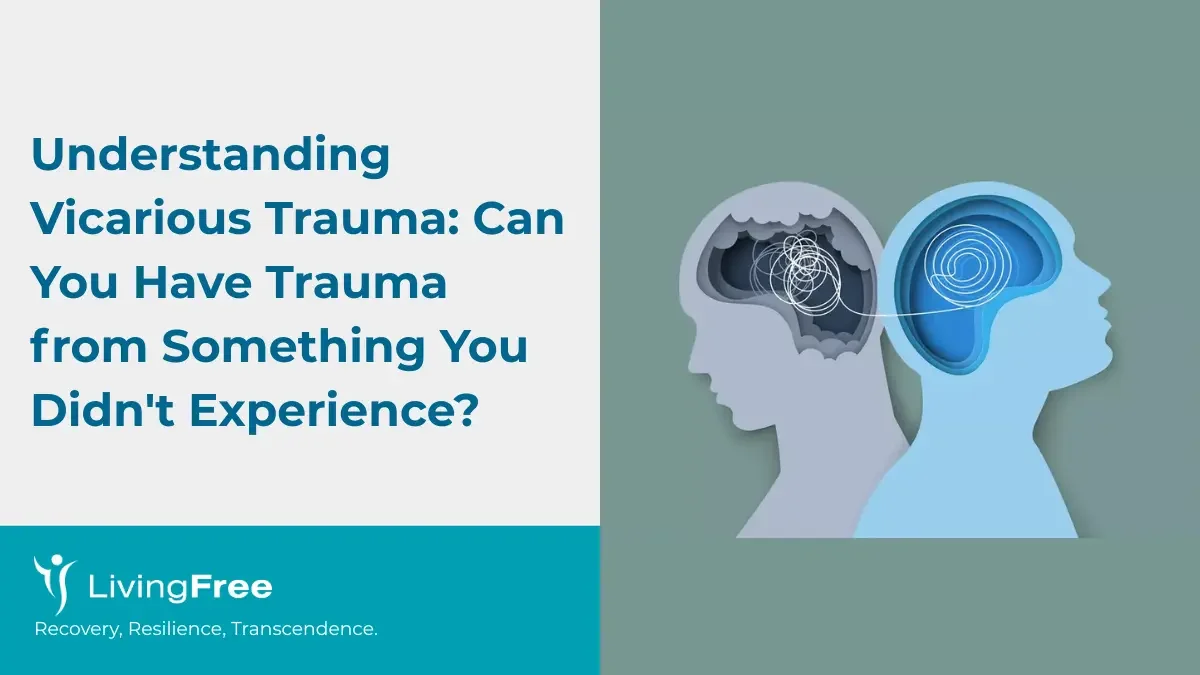
Have you ever found yourself lying awake after hearing a friend’s devastating story, replaying it in your mind as if it happened to you? Or maybe you work in a field where you hear painful accounts day after day, and slowly, almost without noticing, the world started to feel heavier and less safe. If so, you may already be familiar with the quiet weight of vicarious trauma, even if you never had a name for it.
So, can you have trauma from something you didn’t experience? The short answer is yes. And the longer answer is one that more people urgently need to understand.
Table of Contents
What Is Vicarious Trauma?
Vicarious trauma is the experience of absorbing another person’s pain so deeply that it begins to affect your own psychological well-being, your beliefs about the world, and your sense of safety. It is not simply feeling sad for someone or being a good listener. It is a deeper, cumulative transformation of your inner experience, one that can leave lasting marks on how you think, feel, and relate to others.
The term “vicarious traumatization” was first coined by researchers McCann and Pearlman in 1990, drawing from constructivist self-development theory. They described it as the profound psychological effects that can occur in those who work with trauma survivors, effects that can be disruptive and painful, and that can persist for months or years. The concept was later expanded by Pearlman and Saakvitne (1995), who described it as a profound shift in worldview that occurs when helpers are repeatedly exposed to traumatic material.
As psychotherapist Amy Brodsky explains, vicarious trauma gets to the idea that people can be traumatized by something they didn’t personally experience, but that they have a secondary connection to. It is not a formal clinical diagnosis, but it is a widely recognized and deeply studied phenomenon, one that sits at the intersection of empathy, exposure, and psychological resilience.
As Katrina explains in a conversation with Dr. Reshie, trauma work often begins with a deep emotional openness to other people’s experiences:
“When people experience trauma, one of the things that can happen is that we can become very, very small. Part of that might be that it’s just safer to stay with what I know and not take risks because I feel unsafe.”
Her observation captures the quiet psychological contraction that can occur not only in direct trauma survivors, but also in those repeatedly exposed to others’ suffering.
Vicarious Trauma, Secondary Traumatic Stress, and Compassion Fatigue: What’s the Difference?
These three terms often appear together, and they are sometimes used interchangeably. But understanding the distinctions between them matters, especially if you are trying to recognize what you might be going through.
- Vicarious trauma (VT) develops gradually over time through cumulative exposure to traumatic material. It fundamentally changes a person’s worldview, core beliefs, and sense of identity. There is no single event to point to, it is the slow accumulation of pain that has quietly reshaped who you are.
- Secondary traumatic stress (STS) can happen much faster, sometimes after a single incident. It closely mirrors PTSD symptoms and is tied to specific, identifiable traumatic content. A first responder who witnesses a catastrophic accident may develop STS almost immediately.
- Compassion fatigue is primarily about emotional and physical exhaustion. The care is still there, but the reserves have run out. Unlike VT, it doesn’t necessarily involve intrusive thoughts or a shift in worldview, it feels more like hitting an emotional wall.
A useful way to distinguish them: if you keep replaying a specific story, avoiding certain types of cases, or feel hijacked by one particular disclosure, that points toward secondary traumatic stress. If the world itself now feels more dangerous, people feel less trustworthy, and you’ve quietly become someone who expects the worst, that is vicarious trauma territory. And if you’re simply depleted, going through the motions without the distress, that’s closer to compassion fatigue.
All three, however, can exist at once, and often do.
Who Is Most at Risk?
While vicarious trauma can affect anyone who is exposed to others’ pain, certain groups carry a significantly elevated risk. People in helping and caregiving professions are on the front lines of this invisible burden.
- Mental health counselors and therapists
- Social workers, especially those with heavy trauma caseloads
- Nurses, doctors, and emergency room staff
- First responders, firefighters, police officers, paramedics
- Journalists who cover war, disaster, or abuse
- Child welfare workers and victim advocates
- Teachers, particularly those working with at-risk youth
- Family members and close friends of trauma survivors
Research consistently shows that women are disproportionately affected, partly because they are more often in caregiving roles. Women of color providing healthcare or childcare face an even higher risk. The COVID-19 pandemic made the landscape dramatically worse, placing trauma workers in near-constant states of exposure with few emotional safeguards.
But it is important to say clearly: vicarious trauma is not a sign of weakness. It is not a failure of professionalism or personal resilience. As licensed professional counselor Rebecca Phillips puts it, it occurs from sympathetic engagement in a field designed to help others. It is, in many ways, the cost of caring deeply, and that is something worth honoring, not pathologizing.
It is also worth noting that vicarious trauma does not only unfold in professional settings. If you have a partner, parent, or close friend who has survived significant trauma, your sustained proximity to their pain can reshape you over time. The same mechanisms apply. And because trauma shapes relationships, identity, and the way we connect, the ripple effects of one person’s trauma can quietly extend to everyone around them.
The Signs and Symptoms of Vicarious Trauma
Vicarious trauma does not announce itself. It tends to whisper long before it shouts. Many people who are deeply affected describe looking back and realizing, with some shock, that they had been changing for months or even years before they recognized what was happening.
Symptoms span multiple dimensions of a person’s experience:
Emotional Symptoms
- Persistent feelings of sadness, grief, or anxiety
- Irritability, anger, or emotional numbness
- Feeling isolated, unsafe, or hopeless
- A loss of empathy or, conversely, an overwhelming flood of it
- Changes in mood or a darkened sense of humor
Cognitive Symptoms
- Increased cynicism and a jaded worldview
- Difficulty concentrating or making decisions
- Memory problems or gaps
- Inability to stop thinking about others’ traumatic experiences
- Intrusive imagery, seeing or dreaming things that feel borrowed from someone else’s story
Behavioral Symptoms
- Withdrawing from friends, family, or previously enjoyed activities
- Changes in eating, sleeping, or exercise habits
- Increased use of alcohol or other substances
- Difficulty maintaining boundaries between work and personal life
- Procrastination or disengagement at work
Physical Symptoms
- Chronic fatigue that doesn’t improve with rest
- Frequent headaches, stomach problems, or unexplained pain
- Hypervigilance, a racing heart, heightened startle response
- General physical depletion and a sense of always running on empty
Spiritual Symptoms
- Loss of a sense of purpose or meaning
- Feeling disconnected from the world or from faith
- A pervasive sense of being unworthy or undeserving of love
- A collapse of the belief that the world is fundamentally good or safe
That last category (the spiritual dimension) is one of the most telling markers of vicarious trauma specifically, as distinct from burnout or fatigue. When a social worker stops believing that any family can be healthy, or a child abuse investigator loses trust in every adult who approaches a child, something fundamental has shifted. These are not temporary bad days. They are the altered lens through which a person now sees everything.
This kind of deep internal shift often intersects with patterns you might not immediately recognize as trauma-related. For instance, the relentless self-criticism and impossible internal standards that sometimes emerge in trauma survivors (including those dealing with vicarious trauma) are explored in depth in this piece on the inner critic after trauma. What feels like a personal flaw may actually be a wound.
How Vicarious Trauma Changes the Brain and the Body
One of the most important things to understand about vicarious trauma is that it is not “just emotional.” It is neurological and physiological. The brain processes stories of threat in ways that can activate the same stress response systems as direct trauma experience.
When we hear detailed, repeated accounts of violence, abuse, or suffering, the brain’s threat-detection systems )including the amygdala) can become sensitized over time. The body learns to stay alert. Sleep becomes fragmented. The nervous system tilts toward a chronic state of activation, even when there is no immediate danger present.
This is why the symptoms of vicarious trauma overlap so significantly with those of PTSD. Both involve a nervous system that has been trained to expect harm. The difference is in the mechanism of exposure, one direct, one indirect. But from the brain’s perspective, the emotional reality of repeated traumatic narratives can carry significant weight regardless of whether the events happened to you personally.
Dr. Reshie speaks directly to this mind-body connection when discussing stress and trauma:
“If the body is in a distress state, if all of those distress signals are there, then the mind, even if disconnected enough, eventually will go there.”
This is one reason vicarious trauma is not merely emotional exhaustion. Over time, the nervous system itself can become conditioned toward vigilance, stress, and threat anticipation.
The health of a person’s nervous system, their existing resilience, and the support structures around them all influence how vicarious trauma manifests. This is why two people in identical roles can have vastly different experiences, one developing significant symptoms while the other maintains relative equilibrium.
Risk Factors That Make It Worse
Several factors compound the risk of developing serious vicarious trauma symptoms. Understanding these is not about blame, it is about building awareness so that the right support can be accessed sooner.
- Personal trauma history: Those who carry unresolved trauma of their own are more vulnerable when exposed to others’. The stories can activate existing wounds in ways that compound rapidly.
- High caseloads and insufficient recovery time: When exposure is relentless and there is no space to process, the nervous system cannot reset. Research consistently identifies excessive workload as a primary risk factor.
- Lack of supervision or peer support: Working in isolation, without regular opportunities to debrief or be heard, leaves people without the processing they need.
- Confidentiality constraints: Carrying traumatic stories without being able to talk about them, which is an inherent reality of many helping professions, adds a layer of isolation that compounds the burden.
- Low self-compassion: People who hold themselves to harsh internal standards often dismiss their own distress, delaying recognition and help-seeking. This connects to patterns explored in the relationship between trauma and perfectionism, where suffering quietly beneath a polished exterior becomes a way of coping.
- Organizational culture that discourages vulnerability: In environments where admitting struggle is seen as weakness or unprofessionalism, symptoms go underground instead of being addressed.
The Connection to Impostor Syndrome and Overachievement
It might seem like a stretch to connect vicarious trauma to workplace dynamics like impostor syndrome or overachievement. But the connections are more direct than they first appear.
When trauma (whether direct or vicarious) destabilizes a person’s sense of safety and self-worth, many people compensate by working harder, achieving more, and presenting a competent exterior to the world. The drive to keep moving, to stay useful, to avoid stillness can be a way of outrunning distress. This is a recognized trauma response, and it is especially common in high-functioning individuals who may never be flagged as struggling.
The link between impostor syndrome and trauma runs deep in this way, both can stem from an internalized belief that you are not safe, not enough, and that your value is contingent on constant performance. Similarly, overachieving as a trauma response is more common than most people realize, particularly among those in helping professions who carry vicarious wounds without naming them.
Can You Recover from Vicarious Trauma?
Yes. Recovery is possible, and the research on resilience and post-traumatic growth is genuinely encouraging. But recovery requires more than taking a vacation or “leaving work at the door.” It requires intentional, sustained attention to the wounds that have accumulated, and often the support of a professional who understands trauma.
Several evidence-based treatment approaches have demonstrated effectiveness for vicarious trauma:
- Cognitive Behavioral Therapy (CBT): Helps identify and restructure the distorted thought patterns and negative core beliefs that vicarious trauma creates. Particularly useful for addressing cynicism, hopelessness, and the altered worldview that characterizes VT.
- Eye Movement Desensitization and Reprocessing (EMDR): Originally developed for PTSD, EMDR has shown effectiveness for processing traumatic material, including material absorbed vicariously. It helps integrate distressing content without requiring the person to remain in prolonged verbal distress.
- Mindfulness-Based Stress Reduction (MBSR): Helps regulate the nervous system, build present-moment awareness, and reduce the hypervigilance that VT can produce.
- Resilience training and supervision: Structured professional supervision, regular debriefing, and peer support groups serve as both prevention and recovery.
- Somatic approaches: Because vicarious trauma lives in the body as much as the mind, body-based therapies that address the nervous system directly are often particularly helpful.
Beyond formal treatment, self-care is not a luxury, it is a clinical necessity. Regular exercise, consistent sleep, meaningful connection outside of work, creative outlets, and time in nature all contribute to nervous system regulation and resilience. Taking time off must be treated as non-negotiable for those in trauma-adjacent roles, not as something to feel guilty about.
Importantly, vicarious trauma can also open a door to what researchers call vicarious posttraumatic growth, the capacity to find new meaning, deepen compassion, and develop personal wisdom precisely because you have been shaped by bearing witness to others’ pain. The goal of recovery is not erasure of that experience, but its integration.
If you have been carrying the weight of others’ trauma and are wondering whether you are ready to explore this with professional support, it helps to think through how to know if you’re ready for trauma therapy. Readiness does not mean having everything figured out. It simply means being willing to be supported.
What Vicarious Trauma Tells Us About Empathy
There is something worth sitting with in all of this: vicarious trauma does not happen to people who are indifferent. It happens to people who care. It is, in a strange way, evidence of our capacity to be genuinely moved by another human being’s experience, to let it matter, to let it in.
Empathy is not the problem. Unprotected empathy, empathy without boundaries, without self-awareness, without support structures, is where the problem lives. The clinical analogy often used is a useful one: if your friend falls into quicksand, jumping in after them does not help either of you. Reaching from solid ground does. The goal is not to stop caring. It is to learn to care from a place of stability rather than from inside the pain itself.
This is the tension that those affected by vicarious trauma navigate every day. And it is a tension that deserves far more recognition, both in workplaces and in personal life, than it typically receives.
Final Thoughts
Trauma does not always need a direct address to arrive at your door. It can come in through empathy, through proximity, through the sustained act of bearing witness to others’ suffering. If you have recognized yourself in any part of this article, please know that what you’re experiencing is real, it has a name, and you do not have to carry it alone.
At Living Free Today, we work with people navigating all forms of trauma, including the kind you absorb from those you love and those you serve. If you’re ready to explore what healing might look like for you, we invite you to contact us and take that first step toward feeling lighter, steadier, and more like yourself again.