

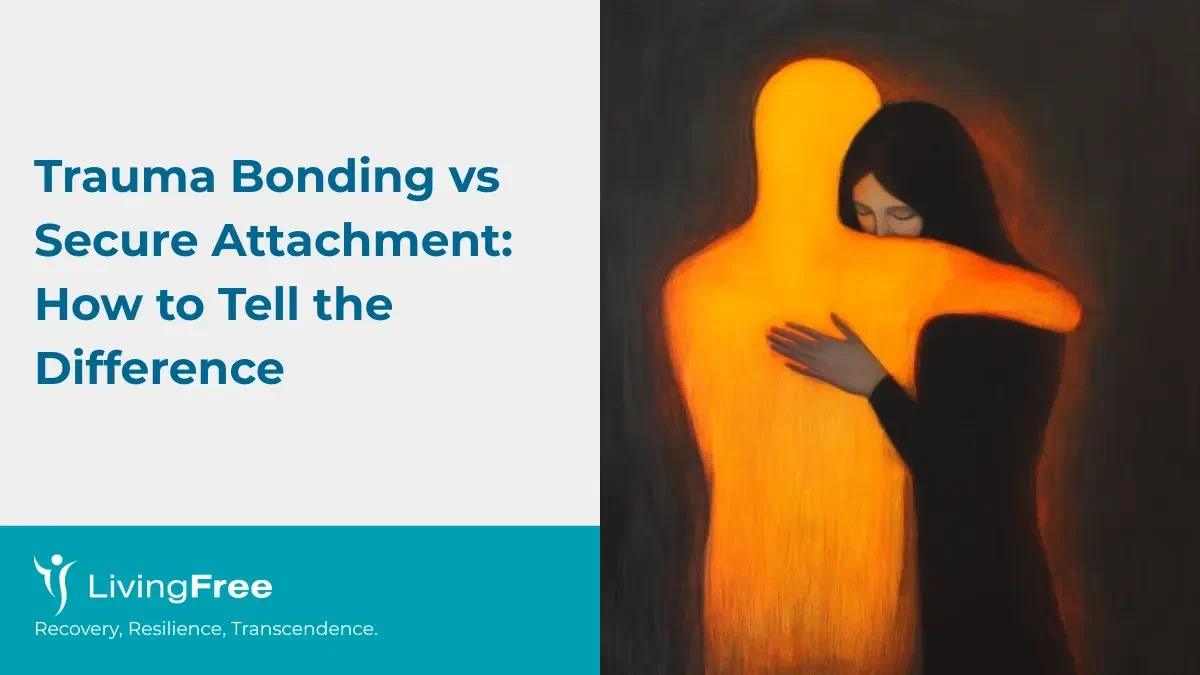
Trauma bonding and secure attachment can feel confusingly similar, especially when intense emotions, longing, and deep connection are involved. Many people mistake emotional intensity for intimacy. However, trauma bonding and secure attachment are fundamentally different relational patterns rooted in very different psychological processes.
Understanding the difference is essential for building healthy, stable relationships and healing from relational trauma.
What Is Trauma Bonding?
Trauma bonding is a strong emotional attachment that develops through repeated cycles of harm, conflict, and intermittent reinforcement. The term was popularized by Patrick Carnes, who described it as a powerful attachment formed through exploitation or abuse.
In trauma bonds, affection and mistreatment are intertwined. The brain becomes conditioned to associate relief from pain with love. Research on intermittent reinforcement shows that unpredictable rewards create stronger behavioral attachment than consistent reinforcement, which helps explain why trauma bonds feel so addictive.
As described in a clinical conversation between Dr. Reshie and Katrina, trauma driven attachment can keep the nervous system in survival mode rather than connection. Dr. Reshie explains, “When we are in trauma, we are not really present. We are either hyperaroused or hypoaroused. We are not actually connected.” This lack of true presence often gets mistaken for intensity or passion.
Common signs of trauma bonding include:
- Intense highs and lows in the relationship.
- Feeling addicted to the person despite ongoing harm.
- Rationalizing or minimizing abusive behavior.
- Fear of abandonment combined with fear of closeness.
- Confusing anxiety with passion.
Neuroscientific research suggests that stress hormones such as cortisol and bonding hormones such as oxytocin can become linked in abusive cycles. This pairing strengthens emotional dependency even when the relationship is damaging.
If you recognize patterns of reactivity, shutdown, or overwhelming emotional triggers, you may also relate to the dynamics explored in trauma triggers in relationships.
What Is Secure Attachment?
Secure attachment develops when caregivers or partners consistently respond with reliability, safety, and emotional attunement. According to attachment theory, first proposed by John Bowlby and expanded by Mary Ainsworth, secure attachment is characterized by trust, emotional regulation, and healthy interdependence.
In adulthood, secure attachment feels calm rather than chaotic. It includes:
- Emotional safety and predictability.
- Open communication without fear of retaliation.
- Ability to repair conflict.
- Independence without threat to the bond.
- Comfort with vulnerability.
Visit and read what emotional security actually feels like after trauma, this guide offers deeper insight. Secure attachment supports nervous system regulation. Rather than activating fight, flight, freeze, or fawn responses, it promotes stability and co regulation. Research by Mikulincer and Shaver shows that securely attached individuals demonstrate greater emotional resilience and healthier stress responses.
Dr. Reshie highlights this distinction clearly: “Secure attachment allows us to be present. It allows us to feel without being overwhelmed.” This presence is the core difference. Secure attachment does not rely on adrenaline or fear. It is grounded in safety and emotional availability.
Trauma Bonding vs Secure Attachment: Key Differences
1. Intensity vs Stability
Trauma bonding is intense and volatile. Secure attachment is steady and consistent. Intensity is not the same as intimacy.
2. Fear Based vs Safety Based
Trauma bonds are fueled by fear of abandonment, rejection, or harm. Secure attachment is grounded in felt safety.
Click here to understand how trauma reshapes identity and connection.
3. Intermittent Reinforcement vs Consistent Care
Trauma bonds rely on unpredictable affection. Secure attachment relies on dependable emotional presence.
4. Hyperarousal vs Regulation
Trauma bonding often keeps the nervous system in hyperarousal or shutdown states. Secure attachment promotes regulation and emotional balance.
If hyperarousal affects your relationships, this resource about ways to build healthier relationships while living with hyperarousal may help:
5. Avoidance and Anxiety Cycles vs Mutual Growth
Trauma bonding frequently involves anxious and avoidant dynamics. Avoidance patterns are common in PTSD and can disrupt closeness. Secure attachment supports growth without emotional volatility.
Why Trauma Bonds Feel Like Love
Trauma bonds often feel powerful because they activate survival circuits in the brain. When love and fear are paired, the body interprets relief from distress as reward. This creates a cycle similar to addiction.
As Katrina reflected in conversation, “It felt intense, so I thought it was deep.” This captures the confusion many people experience. The nervous system reads intensity as meaning, even when that intensity is rooted in fear.
Many myths about trauma healing suggest that intense chemistry equals destiny or deep connection. In reality, calm connection can initially feel unfamiliar or even boring to someone accustomed to chaos. If you are challenging common misunderstandings about healing, consider reading about common myths about trauma healing. Understanding this difference is crucial. What feels electric is not always what is safe.
How to Shift from Trauma Bonding to Secure Attachment
Healing trauma bonding involves:
- Building nervous system regulation skills.
- Developing awareness of triggers.
- Practicing boundaries.
- Seeking trauma informed therapy.
- Learning to tolerate calm connection.
Therapies such as EMDR, somatic experiencing, and attachment based interventions have shown effectiveness in treating trauma related relational patterns. Over time, the nervous system can learn that safety does not have to feel chaotic.
Final Thoughts
Trauma bonding and secure attachment may both involve strong feelings, but only one supports long term emotional health. Secure attachment feels safe, steady, and respectful. Trauma bonding feels urgent, anxious, and destabilizing.
If you are exploring your own relational patterns and want support in building secure attachment, visit Living Free to learn more about trauma informed healing. You can also contact us for guidance and support as you move toward healthier, more secure relationships.
Watch the Full Conversation
This article is drawn from the same in-depth conversation between Reshie and Katrina, where they explore how trauma shapes relationships, identity, and connection, and why healing inevitably moves beyond symptom management.
To hear these ideas explained with clinical clarity and lived experience, watch the full conversation below.