
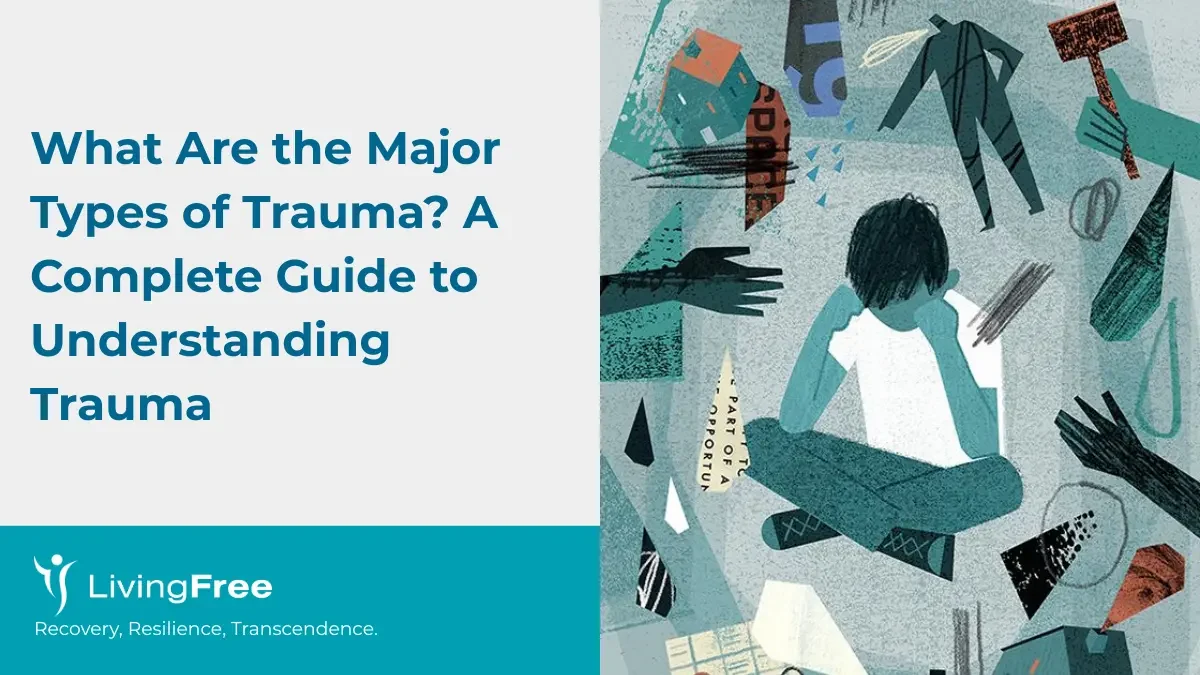
Trauma is one of the most far-reaching forces in human psychology, yet it is also one of the most misunderstood. Many people associate the word with war zones or catastrophic accidents, but the reality is far broader. Trauma can arise from a single devastating moment, from years of quiet, persistent harm, or even from witnessing what happens to someone else. Understanding the different types of trauma is not just an academic exercise. It is the first step toward recognizing your own experience, naming what happened to you, and finding a path forward.
According to the American Psychological Association (APA), trauma is “an emotional response to a terrible event” such as an accident, sexual assault, or natural disaster. But this definition, while accurate, only scratches the surface. Modern trauma research, including the foundational work of psychiatrist and researcher Dr. Bessel van der Kolk, has shown that trauma is not simply what happens to a person but what happens inside a person in response to an overwhelming experience. It reshapes the brain, reorganizes the nervous system, and can alter how someone moves through the world for years or even decades afterward.
This guide walks through the major types of trauma recognized in mental health literature, explores how each one shows up in the body and mind, and offers context for why no two people experience trauma in exactly the same way.
Table of Contents
The Core Framework: How Trauma Is Classified
Trauma researchers and clinicians have developed several overlapping frameworks for classifying trauma. Some focus on the nature of the traumatic event (was it a single incident or repeated over time?). Others focus on the source (did it happen to you directly, or did you absorb it from someone else?). Still others focus on when it occurred in a person’s development.
The most widely used starting point is a three-part model that divides trauma into acute, chronic, and complex forms. From there, researchers and clinicians have expanded the framework to include developmental, vicarious, collective, and historical trauma. Each of these categories has distinct features, distinct effects on mental and physical health, and distinct implications for treatment.
It is also worth noting something important: these categories are not rigid walls. A person can experience several types of trauma simultaneously, and a single event can ripple outward into chronic and complex patterns over time. Understanding why trauma looks different in every person is essential before trying to fit any individual experience into a single box.
1. Acute Trauma
Acute trauma is the most commonly recognized form. It refers to a single, sudden event that overwhelms a person’s ability to cope. The key feature is that it is time-limited: it has a clear beginning and end, even if the psychological aftermath stretches far beyond the event itself.
Common examples of acute trauma include:
- A serious car accident or natural disaster
- A physical or sexual assault
- Witnessing violence or a sudden death
- A sudden medical emergency or life-threatening diagnosis
- A home invasion or robbery
In the immediate aftermath of acute trauma, people often experience shock, disbelief, numbness, or a blunted emotional response. These are the nervous system’s protective mechanisms activating. The brain’s threat-detection center, the amygdala, goes into overdrive, while the prefrontal cortex, responsible for rational thought and language, becomes temporarily suppressed. This is why trauma survivors often struggle to put what happened into words right away.
Many people who experience acute trauma recover without developing a long-term disorder, particularly when they have strong social support, access to mental health resources, and no prior trauma history. However, for others, a single acute event can lead to Post-Traumatic Stress Disorder (PTSD), acute stress disorder (ASD), or significant disruptions in daily functioning that persist for months or years.
2. Chronic Trauma
Chronic trauma involves repeated or prolonged exposure to distressing events over an extended period of time. Rather than a single overwhelming moment, it is the accumulation of harm that becomes defining.
Examples include:
- Ongoing domestic violence or intimate partner abuse
- Repeated childhood physical, emotional, or sexual abuse
- Long-term exposure to war or community violence
- Sustained bullying or harassment
- Living with a chronically ill, addicted, or mentally ill caregiver
Chronic trauma often has a more pervasive effect on a person’s identity and worldview than acute trauma does. When distressing experiences occur repeatedly, the nervous system recalibrates itself around the expectation of threat. A person raised in a chronically unsafe environment may develop hypervigilance, difficulty trusting others, emotional dysregulation, or a persistent sense that the world is fundamentally dangerous.
The effects of chronic trauma tend to be cumulative. Each individual event may appear manageable in isolation, but the ongoing nature of the harm compounds over time. This is part of why understanding the three ways trauma develops matters so much. Trauma is not always the product of one big event. Sometimes it is the result of smaller, repeated experiences that quietly erode a person’s sense of safety and self.
3. Complex Trauma (C-PTSD)
Complex trauma, sometimes called Complex PTSD or C-PTSD, refers to the psychological impact of exposure to multiple, prolonged traumatic events, particularly those that are interpersonal in nature and from which escape feels impossible. It is most commonly associated with childhood abuse, neglect, human trafficking, long-term domestic violence, or captivity.
While standard PTSD is recognized in the DSM-5, Complex PTSD has gained growing acceptance in the clinical community as a distinct and more layered condition. The World Health Organization’s ICD-11 now formally includes C-PTSD as a diagnosis. In addition to the intrusion, avoidance, and hyperarousal symptoms seen in standard PTSD, individuals with complex trauma often experience:
- Severe difficulties with emotional regulation
- Persistent distorted beliefs about themselves (such as deep shame, guilt, or feelings of worthlessness)
- Profound disruptions in their sense of identity
- Difficulty maintaining healthy relationships
- Dissociative symptoms, including feeling detached from one’s own thoughts, feelings, or body
Complex trauma often begins early in life, during periods when a person’s brain, attachment system, and identity are still forming. This is why its effects can feel so deeply embedded. They are not simply memories of bad events. They are patterns woven into the foundational structure of how someone understands themselves and others.
It is also worth noting that talk therapy alone is often insufficient for complex trauma. Because complex trauma is stored in the body and the nervous system, effective treatment typically requires approaches that go beyond verbal processing to include somatic, relational, and regulatory interventions.
4. Developmental Trauma
Developmental trauma is a specific subset of complex trauma that occurs during critical windows of childhood development. What makes it distinct is not just what happened but when it happened. The brain and nervous system of a young child are extraordinarily plastic, meaning they are highly sensitive to experience. Trauma during these windows does not just leave psychological scars; it literally shapes the developing architecture of the brain.
Dr. Bessel van der Kolk has proposed a specific diagnostic category called Developmental Trauma Disorder (DTD) to capture children with complex trauma histories, particularly those involving disrupted attachment. While DTD is not yet formally included in the DSM-5, it reflects an important clinical reality: children who experience trauma in the context of their caregiving relationships face a uniquely complex set of challenges.
Research has consistently shown that adverse childhood experiences (ACEs) are among the strongest predictors of adult physical and mental health outcomes. These experiences include abuse (physical, emotional, sexual), neglect (physical, emotional), and household dysfunction (such as parental substance use, domestic violence, or incarceration). The more ACEs a person accumulates, the higher their risk for depression, anxiety, substance use disorders, cardiovascular disease, and even shortened life expectancy.
Developmental trauma often manifests in adulthood as:
- Chronic difficulties with trust and intimacy
- Fragmented or unstable sense of self
- Patterns of self-sabotage or self-destructive behavior
- Persistent emotional dysregulation
- A tendency to recreate familiar but harmful relational dynamics
For many survivors of developmental trauma, healing involves not just processing specific memories but rebuilding a sense of identity after years spent in survival mode, which is its own distinct and deeply meaningful process.
5. Big-T Trauma vs. Little-t Trauma
Alongside the clinical categories above, mental health professionals commonly use a shorthand distinction between “Big-T” and “little-t” trauma. This framework is not meant to minimize any experience but rather to help people recognize a wider range of events as genuinely traumatic.
Big-T trauma refers to events that are broadly recognized as catastrophic: natural disasters, combat exposure, sexual assault, serious accidents, or life-threatening violence. These are the events most people immediately picture when they hear the word “trauma.”
Little-t trauma refers to events that may appear less dramatic on the surface but are still emotionally significant and can cause lasting distress. Examples include:
- The sudden end of a significant relationship or divorce
- Job loss or financial collapse
- Repeated emotional neglect or invalidation
- Being bullied or publicly humiliated
- The loss of a beloved pet
- Chronic illness or medical trauma
The critical point is that trauma is defined not by the event itself but by the person’s internal response to it. Two people can experience the same event and be affected in entirely different ways. What overwhelms one nervous system may not overwhelm another. This is not a reflection of strength or weakness; it reflects the unique intersection of biology, attachment history, prior trauma, social support, and countless other factors.
Understanding the stages of trauma can be particularly helpful here, as many people are surprised to find that their response evolves in recognizable phases over time, regardless of whether their experience was “big” or “small” by external standards.
6. Vicarious Trauma (Secondary Trauma)
Vicarious trauma, sometimes called secondary traumatic stress, refers to the cumulative psychological impact of being exposed to someone else’s trauma, not through direct experience but through witnessing it, hearing about it, or caring for those who have lived it.
This type of trauma is especially common among:
- Therapists, social workers, and mental health professionals
- First responders, emergency room workers, and nurses
- Journalists who cover war, violence, or disaster
- Family members and close friends of trauma survivors
- Child protective services workers
Research published in clinical psychiatry literature describes vicarious trauma as the “unfavorable changes, both affective and cognitive, resulting from exposure to second-hand traumatic material.” Importantly, vicarious trauma is distinct from burnout or compassion fatigue, though all three can coexist. What sets vicarious trauma apart is a fundamental shift in the person’s worldview, their core beliefs about safety, meaning, trust, and the nature of the world become altered as a result of sustained exposure to others’ suffering.
Symptoms of vicarious trauma closely parallel those of direct trauma and may include:
- Intrusive thoughts or images from others’ trauma narratives
- Emotional numbness or withdrawal from loved ones
- Hypervigilance about safety and potential threats
- Loss of meaning or cynicism about one’s work
- Sleep disturbances and difficulty relaxing
- Increased irritability or angry outbursts
Recognizing vicarious trauma as a legitimate form of psychological injury is important for both individuals and organizations. It is not a sign of weakness. It is the natural consequence of being human in the presence of suffering.
7. Collective and Historical Trauma
Some forms of trauma extend beyond individual experience to affect entire communities, cultures, or generations. Collective trauma and historical trauma are two closely related but distinct concepts within this broader category.
Collective Trauma
Collective trauma refers to a shared traumatic event or series of events that shatter the sense of safety for an entire group of people. Natural disasters, pandemics, acts of terrorism, and mass violence are all examples. Collective trauma is not simply many individuals experiencing the same event. It is a rupture in the shared social fabric, an experience that alters how a community understands itself and its relationship to safety, trust, and the future.
The COVID-19 pandemic, for instance, represented a global collective trauma that disrupted ordinary life, generated widespread grief, and left many communities grappling with ongoing anxiety, distrust, and loss long after the acute crisis passed.
Historical Trauma
Historical trauma, a concept first developed by Dr. Maria Yellow Horse Brave Heart while working with Lakota communities in the 1980s, refers to cumulative emotional and psychological harm experienced by a specific cultural, racial, or ethnic group as a result of massive, targeted oppression. Examples include the enslavement of African Americans, the Holocaust, the forced removal of Indigenous peoples, and colonial genocide.
What makes historical trauma particularly significant is its intergenerational transmission. Research has found that descendants of trauma survivors may carry measurable physiological and psychological effects, including increased vulnerability to depression, anxiety, substance use, and cardiovascular disease. The mechanisms include epigenetic changes, disrupted attachment patterns passed through families, and ongoing exposure to the social, economic, and political consequences of historical injustices that continue to shape daily life.
As the APA has noted, collective trauma can affect decisions about how one works, parents, and moves through the world, even when a person was not directly present for the original traumatic events.
How Trauma Lives in the Body
Regardless of which type of trauma a person has experienced, one of the most important insights from modern trauma research is that trauma is not just a psychological event. It is a biological one. Dr. van der Kolk’s influential research and his landmark book The Body Keeps the Score (2014) demonstrated what many trauma survivors had long known intuitively: the body holds the imprint of traumatic experience long after the mind may have “moved on.”
When a person encounters a traumatic event, the brain’s survival circuitry activates rapidly. The amygdala, which functions as the brain’s alarm system, triggers the release of stress hormones including cortisol and adrenaline. The prefrontal cortex, responsible for rational thought and language, is temporarily suppressed. The body mobilizes for fight, flight, freeze, or fawn. These are not choices but automatic, subcortical responses designed to protect survival in the moment.
The problem arises when this system does not fully reset after the danger has passed. Research has shown that trauma reminders activate the same brain regions that supported the original emergency response, while simultaneously decreasing activation in the areas responsible for integrating sensory input, modulating arousal, and putting experience into words. In practical terms, this means a person can be transported back into the physiological reality of a traumatic event by a smell, a tone of voice, or a particular quality of light, without any conscious recognition of why they are suddenly flooded with fear or rage.
This connection between trauma and the body is something many clinicians now emphasize strongly. In discussing her own experience, Katrina described how she once
“lived very much in my mind” while her body was “giving constant signals that things might not be quite right.”
Dr. Reshie similarly notes that
“where the body goes, the mind will follow,”
underscoring a core principle of modern trauma treatment: trauma is not just remembered cognitively, but carried physiologically through the nervous system.
This neurobiological reality is also why understanding the window of tolerance is so central to trauma healing. The window of tolerance describes the optimal zone of arousal within which a person can process difficult experiences without becoming overwhelmed or shutting down. Expanding that window is a core goal of effective trauma treatment.
Common Signs and Symptoms of Trauma
While trauma manifests differently depending on the type, duration, and individual factors involved, there are common clusters of symptoms that span multiple trauma categories. The DSM-5 organizes PTSD symptoms into four key groups:
- Intrusion: Unwanted memories, nightmares, flashbacks, and intense psychological or physical distress when reminded of the trauma.
- Avoidance: Efforts to avoid thoughts, feelings, people, places, or activities associated with the trauma.
- Negative changes in thinking and mood: Distorted beliefs about oneself or the world, persistent negative emotions (shame, guilt, fear, anger), feelings of detachment from others, and an inability to experience positive emotions.
- Alterations in arousal and reactivity: Hypervigilance, exaggerated startle response, irritability, reckless behavior, difficulty concentrating, and disrupted sleep.
Beyond the formal PTSD criteria, trauma can also manifest as depression, anxiety disorders, substance use, eating disorders, chronic pain, autoimmune conditions, and relationship difficulties. Many people live with the effects of trauma for years without ever connecting their symptoms to their history, particularly when the trauma was chronic, developmental, or occurred in contexts that were normalized or minimized.
It is also worth understanding that symptoms can fluctuate significantly over time. A person may feel relatively stable and then find themselves destabilized by a seemingly minor trigger. This does not mean they are getting worse. It often reflects the natural, nonlinear nature of trauma recovery. Why symptoms fluctuate during healing is a topic that many trauma survivors find enormously validating once they understand the underlying processes involved.
The Path Toward Healing
Understanding the type of trauma a person has experienced is not merely theoretical. It directly informs what kind of support and treatment is likely to be most effective. Acute trauma often responds well to focused, time-limited interventions like trauma-focused cognitive behavioral therapy (TF-CBT) or Eye Movement Desensitization and Reprocessing (EMDR). Chronic and complex trauma typically require longer-term, relationally grounded approaches that prioritize safety, stabilization, and nervous system regulation before moving into deeper trauma processing.
The stages of healing from trauma are well-documented in the clinical literature. Judith Herman’s foundational three-phase model (safety and stabilization, remembrance and mourning, reconnection and integration) remains one of the most influential frameworks. What these stages share across different models is the understanding that healing is not a linear process, that it often feels worse before it feels better, and that genuine recovery involves not just symptom reduction but a reclaimed sense of agency, identity, and connection.
One of the most important questions a person can ask when considering treatment is not just “what happened to me?” but “am I ready to engage with this in a therapeutic context?” Knowing whether you are ready for trauma therapy is a meaningful and valid starting point, and a good trauma-informed therapist will help you assess and build that readiness rather than rushing past it.
It is equally important to hold realistic expectations about the timeline of recovery. How long trauma therapy takes depends on many variables, including the type and severity of trauma, the presence of complex or developmental trauma, access to consistent care, and an individual’s unique nervous system and life circumstances. There is no single answer, but there is always a meaningful direction of movement available.
Finally, it is worth acknowledging that healing can feel worse before it feels better. As the nervous system begins to thaw and the defenses built around trauma begin to shift, feelings that were long suppressed often surface. This is not regression. It is often a sign that real healing is underway.
Final Thoughts
Trauma is not a life sentence, but it is a serious and complex force that deserves to be understood with both precision and compassion. Whether what you have experienced looks like a dramatic, life-altering event or years of quiet, unacknowledged pain, your experience is real, your nervous system responded for good reason, and healing is genuinely possible. At Living Free, we believe that understanding your trauma is the foundation of transforming it. If you are ready to take the next step, we warmly invite you to contact us and explore what support might look like for you.
You do not have to navigate this alone. Reaching out is not a sign of weakness. It is one of the most courageous acts a person can take.