
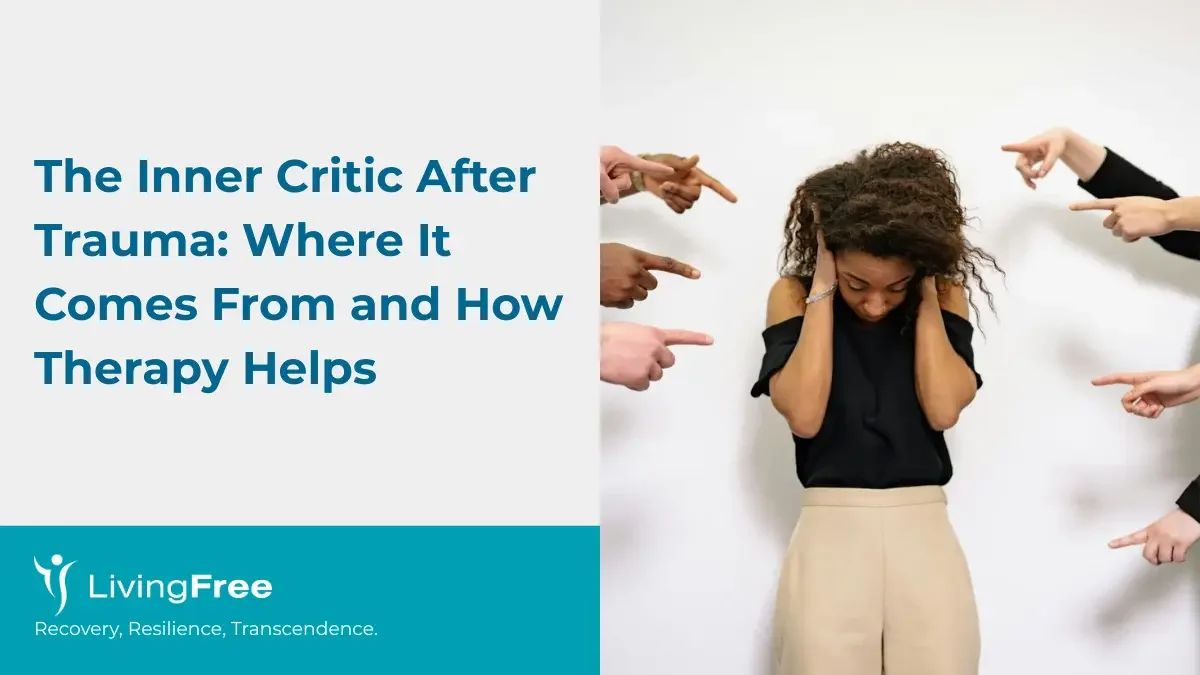
The inner critic after trauma can feel relentless. It whispers that you are weak, broken, dramatic, or not trying hard enough. For many trauma survivors, this harsh internal voice becomes louder than any external criticism. It shapes how they see themselves, how they relate to others, and how safe they feel in the world.
Understanding where the inner critic comes from and how therapy helps is a crucial step in trauma recovery. When viewed through a trauma informed lens, the inner critic is not an enemy. It is a survival strategy that developed in response to overwhelming experiences.
Table of Contents
What Is the Inner Critic?
The inner critic is the internalized voice of judgment, shame, and self blame. It may sound like:
- “It was my fault.”
- “I should have known better.”
- “I am too sensitive.”
- “Something is wrong with me.”
In trauma survivors, this voice often becomes rigid and extreme. Research in trauma psychology shows that traumatic experiences can disrupt core beliefs about safety, trust, power, control, esteem, and intimacy. When those beliefs are shattered, the mind tries to make sense of what happened. Self blame becomes a way to create an illusion of control. If it was my fault, then maybe I can prevent it next time.
This process has been described in cognitive models of posttraumatic stress disorder, including the work of Ehlers and Clark, who explain how negative appraisals of the trauma and its aftermath maintain ongoing distress.
Where the Inner Critic Comes From After Trauma
1. Internalized Blame and Shame
Many survivors, especially of childhood trauma, grow up in environments where they are blamed, shamed, or emotionally invalidated. Over time, those external messages become internalized. The critical caregiver becomes an internal voice.
Judith Herman’s work on trauma highlights how chronic interpersonal trauma often produces profound shame and a damaged sense of self. The survivor does not just remember what happened. They come to believe that they are fundamentally flawed.
2. A Survival Strategy to Stay Safe
The inner critic often develops as a protective mechanism. If a child learns that being perfect reduces conflict, they may develop harsh self monitoring. If a survivor believes that anticipating every mistake prevents harm, self criticism feels necessary.
This connects closely with patterns of hypervigilance and avoidance that are common in PTSD. If you notice yourself constantly bracing for danger or withdrawing to prevent perceived mistakes, you may recognize themes discussed in this article on avoidance in PTSD.
From a trauma informed perspective, the inner critic is trying to prevent future harm. The problem is that it continues long after the original danger is gone.
3. Trauma Triggers That Activate the Critical Voice
The inner critic is often activated by trauma triggers. A small mistake at work, a disagreement with a partner, or even a neutral facial expression can trigger intense self attack.
Triggers can reactivate the emotional memory of the trauma, even when there is no present danger. If you want to understand how certain cues activate intense emotional reactions, this resource on trauma triggers explains the process in depth.
In relationships, the inner critic may say, “You are too much,” or “They will leave you.” These patterns are common when trauma is relational in nature. You can explore more in this guide on trauma triggers in relationships.
4. Childhood Trauma and Core Beliefs
Childhood trauma has a powerful impact on identity formation. When trauma occurs early, children often assume responsibility because it feels safer than believing their caregivers are unsafe.
Over time, these beliefs become automatic and unquestioned. As adults, survivors may not realize that their self criticism is rooted in childhood experiences. If this resonates, you may find insight in this article about childhood trauma triggers in adulthood.
Research on complex trauma shows that chronic early adversity shapes core schemas about worthiness and competence. These schemas then fuel the inner critic.
5. Trauma and Decision Making
The inner critic also affects decision making. Trauma can narrow perception and increase fear of making mistakes. Survivors may overanalyze, procrastinate, or seek excessive reassurance.
This pattern is closely linked to how trauma affects cognitive processing and threat detection systems in the brain. For a deeper look at how trauma impacts choices and confidence, see this article on how trauma affects decision making.
When the inner critic dominates, every decision feels like a potential catastrophe.
The Psychological Mechanisms Behind the Inner Critic
Several evidence based frameworks help explain the inner critic after trauma:
- Cognitive models of PTSD emphasize negative appraisals and maladaptive beliefs.
- Attachment theory highlights how early relational trauma shapes internal working models of self and others.
- Schema theory explains how enduring negative core beliefs become activated in triggering situations.
- Self compassion research shows that shame and self criticism are strongly associated with trauma exposure and psychological distress.
Neuroscience research also suggests that trauma sensitizes the amygdala and alters prefrontal regulation. This makes threat detection faster and self soothing harder. The inner critic often becomes louder when the nervous system is dysregulated.
How Therapy Helps Quiet the Inner Critic
Therapy does not aim to eliminate the inner critic overnight. Instead, it helps you understand, soften, and transform it.
1. Creating Safety and Stabilization
Before challenging the inner critic, therapy focuses on nervous system regulation and emotional safety. Trauma informed therapy prioritizes stabilization so that exploration does not become retraumatizing.
As safety increases, the intensity of self attack often decreases.
2. Identifying and Restructuring Core Beliefs
Cognitive processing therapy and other trauma focused approaches help clients examine beliefs such as “It was my fault” or “I am permanently damaged.” Through structured reflection and evidence gathering, these beliefs are gradually reworked.
Research shows that modifying maladaptive trauma related beliefs reduces PTSD symptoms and shame.
3. Working With Parts Rather Than Fighting Them
Some approaches, such as parts based therapies, conceptualize the inner critic as one part of the personality that developed to protect the system. Instead of silencing it, therapy helps you understand its protective intention and update its role.
When the critic is met with curiosity rather than hostility, it often softens.
4. Cultivating Self Compassion
Studies by Kristin Neff and colleagues show that self compassion is associated with lower PTSD symptoms and reduced shame. Therapy often includes exercises that strengthen a compassionate inner voice.
Over time, survivors learn to respond to mistakes or triggers with kindness instead of punishment.
Signs Your Inner Critic May Be Trauma Related
You may be dealing with a trauma based inner critic if:
- Your self criticism feels extreme or all or nothing.
- Small mistakes trigger intense shame.
- You feel responsible for other people’s emotions.
- You struggle to accept praise or positive feedback.
- You fear that if you stop criticizing yourself, something bad will happen.
These patterns are not character flaws. They are adaptations.
Final Thoughts
The inner critic after trauma is not proof that you are broken. It is evidence that your mind tried to survive overwhelming experiences. With the right support, that critical voice can shift from harsh judgment to protective awareness. Healing does not mean becoming perfect. It means learning to relate to yourself with understanding.
If you recognize these patterns in your own life, you do not have to navigate them alone. At Living Free, we provide trauma informed insights and therapeutic support to help you rebuild a compassionate relationship with yourself. If you are ready to begin, contact us and take the first step toward healing.