
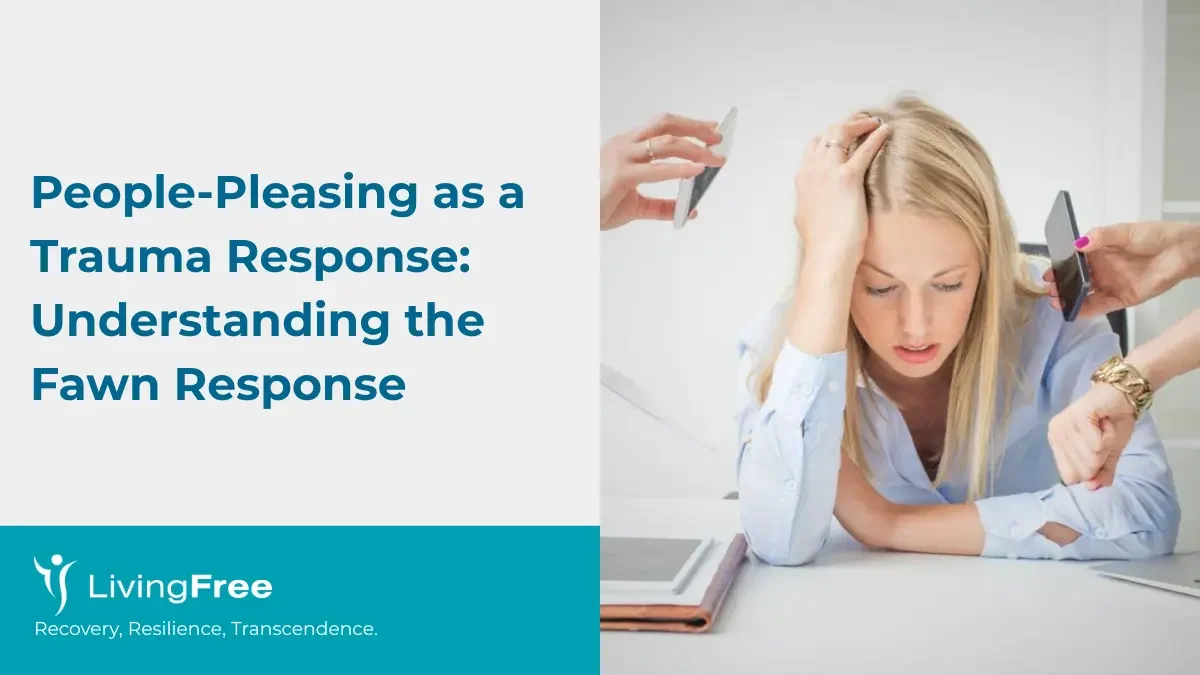
People-pleasing is often seen as a personality trait or a learned social habit. In reality, for many trauma survivors, it is a deeply ingrained survival strategy. Within trauma psychology, this pattern is known as the fawn response, a nervous system reaction that develops when safety depends on appeasing others.
Unlike healthy cooperation or kindness, trauma-based people-pleasing is driven by fear, hypervigilance, and an unconscious belief that conflict equals danger. Understanding this response is essential for both healing and self-compassion.
Table of Contents
What Is the Fawn Response?
The fawn response is one of the trauma survival responses alongside fight, flight, and freeze. It occurs when an individual learns that the best way to stay safe is to please, submit to, or emotionally manage others.
This response is most commonly formed in environments where:
- Expressing needs led to punishment, rejection, or emotional withdrawal.
- Authority figures were unpredictable or emotionally volatile.
- Love and safety were conditional on compliance.
Over time, the nervous system adapts by prioritizing others’ needs over one’s own.
How Trauma Shapes People-Pleasing Behavior
When someone grows up in chronic stress or relational trauma, their nervous system becomes attuned to threat cues such as tone of voice, facial expressions, or emotional shifts. People-pleasing becomes a way to regulate danger externally rather than internally.
Common trauma-driven people-pleasing behaviors include:
- Difficulty saying “no” even when exhausted or overwhelmed.
- Taking responsibility for others’ emotions.
- Fear of disappointing others.
- Suppressing anger, needs, or preferences.
- Over-apologizing or minimizing oneself.
These behaviors are not conscious choices. They are automatic survival responses learned early and reinforced over time.
Developmental and Attachment Roots
The fawn response is closely linked to attachment trauma. Children who cannot escape or confront unsafe caregivers often learn to maintain proximity by becoming agreeable, helpful, or emotionally attuned beyond their developmental capacity.
This pattern often continues into adulthood through:
- Anxious or disorganized attachment styles.
- Codependent relationship dynamics.
- Chronic self-abandonment in favor of relational safety.
In adulthood, the body may still react as though disagreement or boundaries could lead to abandonment or harm.
Nervous System Perspective
From a neurobiological standpoint, people-pleasing reflects a dysregulated autonomic nervous system. The individual may appear socially functional while internally operating in a state of threat response.
The vagal system remains externally oriented, constantly scanning others for cues of approval or disapproval. Safety is experienced conditionally rather than internally.
This explains why reassurance rarely resolves the anxiety and why people-pleasing persists even in objectively safe relationships.
Psychological and Emotional Consequences
While the fawn response can maintain short-term relational stability, long-term effects often include:
- Chronic anxiety and burnout.
- Loss of identity and personal boundaries.
- Resentment and emotional numbness.
- Difficulty accessing anger or assertiveness.
- Increased vulnerability to manipulation or emotional abuse.
Many individuals report feeling invisible, exhausted, or disconnected from their own desires.
Healing the Fawn Response
Recovery does not begin with forcing assertiveness. It starts with recognizing people-pleasing as a protective strategy rather than a flaw.
Effective healing approaches often include:
- Trauma-informed therapy.
- Somatic and nervous system regulation practices.
- Attachment-focused work.
- Gradual boundary experimentation in safe relationships.
- Reconnecting with internal cues such as needs, preferences, and bodily sensations.
Learning to tolerate discomfort during disagreement is a key milestone in nervous system healing.
Reframing People-Pleasing With Compassion
People-pleasing is not a weakness. It is evidence of adaptability, intelligence, and survival. For many trauma survivors, it once kept them safe when no other option existed.
Healing involves teaching the nervous system that safety no longer depends on self-erasure. With time, support, and patience, individuals can learn to experience connection without losing themselves.
Final Thoughts
Seeing people-pleasing as a trauma response can change the way you relate to yourself. What once felt automatic or confusing may begin to make sense when viewed as a learned way of staying safe. Approaching these patterns with curiosity rather than pressure can open space for greater awareness and choice. You can find more reflections and resources on related topics at livingfree.
If this resonates and you feel ready to explore it at your own pace, you are welcome to contact us here.
Related Post: