

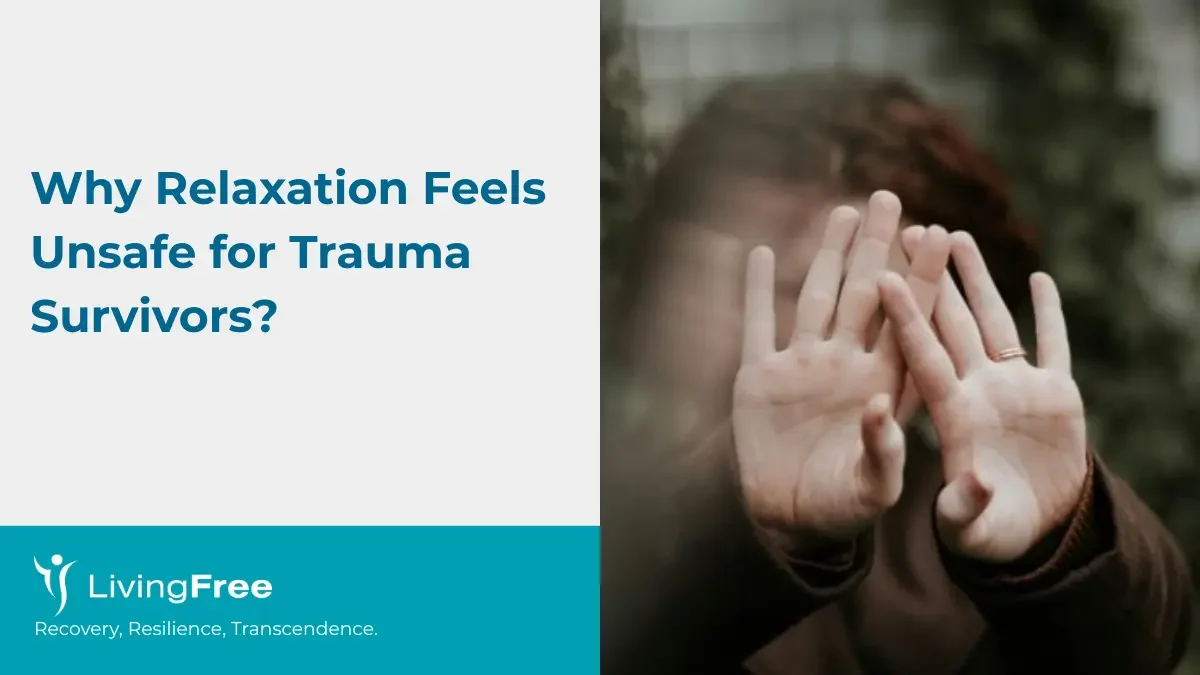
For many trauma survivors, being told to “just relax” can feel confusing, or even threatening. Instead of calm, relaxation may trigger anxiety, panic, numbness, or a sudden urge to escape. This reaction isn’t a personal failure or resistance to healing. It’s a natural consequence of how trauma reshapes the nervous system.
Understanding why relaxation feels unsafe is essential for healing in a way that respects the body’s need for safety first.
Trauma and the Survival-Oriented Nervous System
Trauma trains the nervous system to prioritize survival above all else. When someone experiences overwhelming stress (especially repeatedly or during early life) the body learns that danger can appear suddenly and without warning.
As a result:
- The nervous system remains on high alert (hyperarousal).
- Threat detection becomes overactive.
- The body learns to associate vigilance with safety.
In this state, relaxation isn’t neutral, it feels risky. Letting the guard down can register as exposure to danger, even when the person is objectively safe. That’s why relaxation feels unsafe for trauma survivors.
Why Calm Can Trigger Fear Instead of Peace?
For trauma survivors, calm states may be unconsciously linked to moments of vulnerability. This can include:
- Being harmed while resting or sleeping.
- Being punished for “letting your guard down”
- Growing up in environments where safety was unpredictable.
When the body begins to relax, heart rate slowing, muscles softening, awareness turning inward, the nervous system may interpret this as a threat signal. This creates what many clinicians describe as the paradox of calm: safety sensations feel unsafe.
The Body Remembers What the Mind Tries to Forget
Trauma is stored not only as memory, but as sensation. Even when someone cognitively understands they are safe, the body may not agree.
Relaxation practices often increase interoceptive awareness, attention to internal sensations like breath, heartbeat, or muscle tension. For trauma survivors, this inward focus can:
- Activate traumatic memories.
- Trigger dissociation or shutdown.
- Create a sense of losing control.
In these moments, the nervous system may push back with anxiety, restlessness, or emotional flooding to regain a sense of control.
When Relaxation Techniques Backfire
Many common relaxation tools are not trauma-informed. Practices like:
- Deep or controlled breathing.
- Long guided meditations.
- Body scans done too early.
- Lying flat with eyes closed.
can unintentionally activate fight, flight, or freeze responses.
For example, deep breathing can resemble breath restriction for someone with a history of suffocation or control-based trauma. Stillness can feel like being trapped. Silence can amplify intrusive memories.
This doesn’t mean relaxation is harmful, it means timing and approach matter.
Complex Trauma and the Loss of Felt Safety
People with complex or developmental trauma often struggle most with relaxation. When trauma occurs in relationships or during childhood, the nervous system may never fully learn what safety feels like.
Instead of returning to a calm baseline, the body may oscillate between:
- Hyperarousal (anxiety, agitation, panic)
- Hypoarousal (numbness, collapse, dissociation)
In these cases, relaxation feels unfamiliar (not soothing) and the nervous system resists it.
What Actually Helps: A Trauma-Informed Approach
Healing doesn’t start with forcing relaxation. It starts with building safety and capacity.
1. Grounding Before Calming

Grounding focuses on orientation and control, not relaxation. Examples include:
- Naming visible objects in the room.
- Feeling feet on the floor.
- Holding a textured or weighted object.
These techniques help the nervous system recognize the present moment as safe.
2. Micro-Moments of Rest
Instead of long meditations, start with 10 – 30 seconds of safe pause. This teaches the body that stillness can exist without danger.
These moments can gradually expand.
3. Choice-Based Practices
Trauma survivors heal best when they maintain agency. Practices should always allow:
- Open eyes.
- Movement.
- The option to stop immediately.
- Choice rebuilds trust in the body.
4. Gentle Movement Over Stillness

Walking, stretching, or rhythmic motion often regulates the nervous system more effectively than sitting still. Movement allows safety and regulation without vulnerability.
5. Trauma-Sensitive Breath Awareness
Instead of changing the breath, simply notice it. Let the breath do what it wants. Regulation comes from observation, not control.
6. Professional Support When Needed
If relaxation attempts consistently trigger panic, dissociation, or flashbacks, working with a trauma-informed therapist is essential. Somatic therapies, EMDR, and nervous-system-focused approaches help restore safety gradually and sustainably.
Reframing the Experience
If relaxation feels unsafe, it doesn’t mean something is wrong with you. It means your nervous system adapted brilliantly to protect you.
Healing isn’t about overriding that protection, it’s about teaching the body that safety can exist now, in this moment, at this pace.
Final Thoughts
Relaxation isn’t the starting point for trauma recovery, it’s often the result. When safety is built first, calm follows naturally.
If you or someone you love struggles to relax after trauma, remember: slowing down is a skill that must be relearned gently. With the right support and approach, the nervous system can rediscover what true rest feels like, without fear. Whenever you’re ready, you can feel free to contact us here!
Related post: