
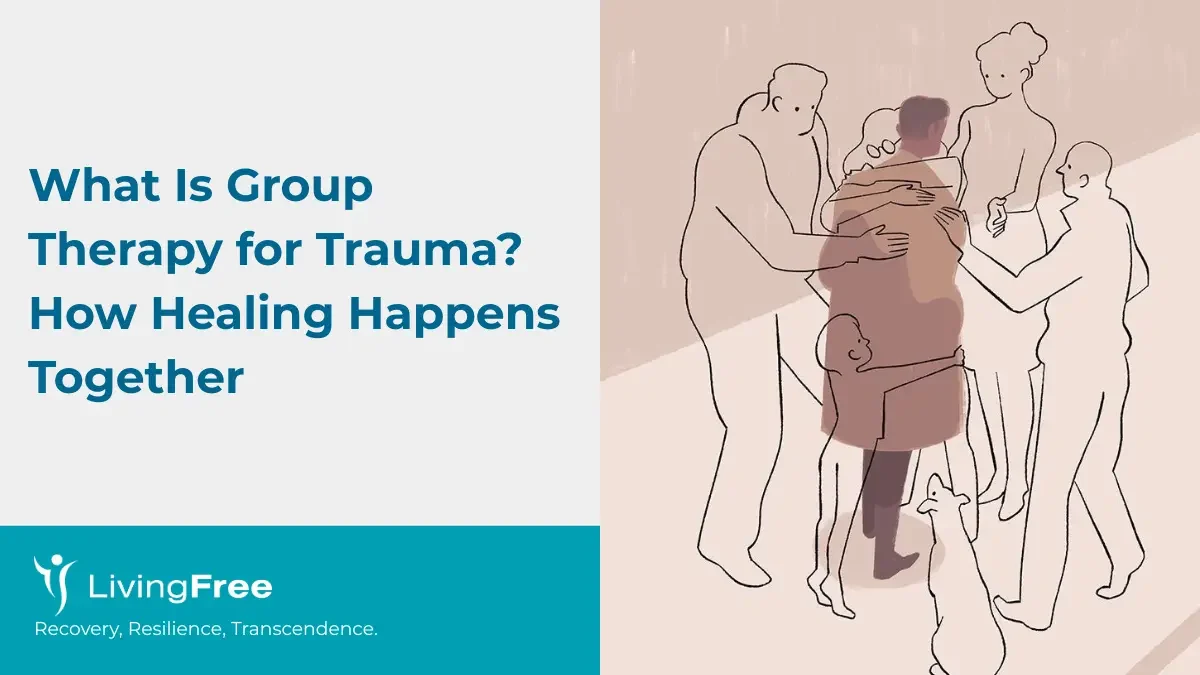
Healing from trauma is rarely something a person can do in complete isolation. Yet for many survivors, isolation is exactly where they end up: cut off from other people by shame, avoidance, and the quiet but persistent belief that no one else could possibly understand what they went through. Group therapy for trauma directly interrupts that cycle. It brings survivors into a shared space where the experience of being witnessed and understood by people who have walked a similar path becomes, in itself, a powerful force for recovery.
But what exactly is group therapy for trauma? How does it work, and is it right for everyone? This article explores the foundations of trauma-informed group therapy, the clinical models that drive it, who benefits most, and what the research says about its effectiveness.
Table of Contents
What Is Group Therapy for Trauma?
Group therapy for trauma is a structured, clinician-led form of psychotherapy in which several people who have experienced trauma attend sessions together. It is not a drop-in support circle or a casual peer group. Sessions are facilitated by one or more licensed mental health professionals who specialize in trauma, post-traumatic stress disorder (PTSD), or both. The primary goals are to help participants process their trauma, develop coping strategies, reduce distressing symptoms, and rebuild a sense of safety and connection with others.
Groups vary in size, typically ranging from as few as four participants to around twelve, though many trauma-focused programs keep groups to six to eight people to allow genuine connection to form. They may be open (allowing members to join at different points) or closed (requiring all members to register and begin together). Some groups are designed around specific trauma types or populations, such as survivors of childhood sexual abuse, combat veterans, or adults navigating complex trauma histories.
The history of group treatment for trauma stretches back several decades. It developed in parallel with the formal recognition of PTSD as a diagnostic category in 1980, when the third edition of the Diagnostic and Statistical Manual of Mental Disorders first gave clinical language to what many trauma survivors had been living with for years.
Why Trauma Survivors Often Heal Better in a Group
There is a particular kind of relief that comes from sitting in a room, even a virtual one, and realizing you do not have to explain yourself from scratch. For survivors of prolonged or childhood trauma especially, shame tends to go unchallenged for years, deepening in proportion to the silence around it. Witnessing someone else name the same experience, and watching them begin to move through it, can interrupt that cycle in ways that individual therapy alone sometimes cannot reach.
Trauma, by its nature, fractures a person’s sense of connection to others and to their own sense of self. As van der Kolk (2014) has noted, trauma is not just an event that happened in the past; it is a reorganization of the way the mind and body continue to experience the present. That reorganization often shows up most clearly in relationships. If you have ever noticed how trauma tends to surface most intensely in close relationships, you already have some sense of why a relational setting like group therapy can be so potent. The group itself becomes both the context and the instrument of healing.
Research consistently supports this. A meta-analysis published in European Journal of Psychotraumatology found that group treatments are associated with meaningful reductions in PTSD symptom severity, with particularly strong evidence for exposure-based cognitive-behavioral formats. The therapeutic mechanism, researchers noted, is not limited to skill-building. It includes the experience of shared humanity that forms between participants over time.
The Core Benefits of Group Therapy for Trauma
Trauma-informed group therapy offers a distinct set of benefits that go beyond what most people expect when they first consider it. Some of the most significant include:
- Validation and reduced isolation. Hearing others describe experiences that mirror your own is deeply validating. Many trauma survivors carry the hidden belief that their reactions are abnormal or that they are uniquely broken. The group setting normalizes those responses as understandable reactions to abnormal events, which directly reduces shame and the sense of being alone.
- Shared learning. Group members benefit not only from the therapist’s guidance but from each other’s insights, coping strategies, and progress. Witnessing someone further along in recovery can restore hope in ways that are difficult to manufacture in a one-on-one clinical setting.
- Normalization of symptoms. Symptoms like hypervigilance, emotional numbness, difficulty trusting others, or persistent low-grade shame are common sequelae of trauma. Learning this in a group context, surrounded by others who are navigating the same responses, fundamentally shifts how survivors relate to their own experience.
- Relational repair. For many trauma survivors, relationships feel profoundly unsafe after trauma. The group provides a structured, boundaried space to practice trust, vulnerability, and connection at a pace that feels manageable.
- A natural support network. The bonds formed within a trauma therapy group often provide a layer of support that extends beyond the sessions themselves. This social scaffolding is particularly meaningful for survivors who may have lost or never had a reliable support system.
- Accessibility and affordability. Group therapy is typically more affordable than individual therapy, which matters enormously given that trauma recovery often requires sustained, ongoing support over months or years.
- Empowerment through contribution. Supporting another group member, offering a perspective, or simply being present for someone else’s difficult moment can be genuinely therapeutic. It shifts a survivor’s self-perception from passive victim to active participant in someone else’s healing, which can be deeply restorative.
Types of Group Therapy Used for Trauma
Not all trauma group therapy is the same. There are several distinct models, each drawing on different clinical traditions and suited to different presentations and goals.
Trauma-Focused Cognitive Behavioral Therapy (TF-CBT)
TF-CBT is one of the most extensively researched approaches for trauma, particularly for children and adolescents, though group-based CBT formats have strong evidence across age groups. In a group setting, cognitive behavioral methods focus on identifying and restructuring distorted beliefs rooted in the trauma (such as “I deserved it” or “I am permanently broken”), building coping skills, and gradually reducing avoidance. Exposure-based group CBT in particular has robust empirical support, with a Frontiers in Psychiatry meta-analysis confirming its efficacy across a range of trauma types and populations.
Cognitive Processing Therapy (CPT)
CPT was originally developed for sexual assault survivors and has since been widely adopted for PTSD treatment across populations including combat veterans and survivors of complex trauma. It focuses specifically on what are called “stuck points,” distorted cognitions about the trauma and its aftermath that prevent emotional processing. Group CPT is structured across approximately twelve sessions and has a strong evidence base, with the International Society for Traumatic Stress Studies citing group-based trauma-focused CBT (including CPT) as an effective treatment modality.
Psychoeducation Groups
Psychoeducation groups focus on helping participants understand how trauma affects the brain, the body, and behavior. While they are generally less focused on direct symptom reduction than exposure-based formats, they provide an essential foundation. Understanding the neurobiology of trauma, including concepts like the stress response, the role of the nervous system, and the window of tolerance, reduces self-blame significantly and helps survivors make sense of responses that previously felt confusing or shameful.
Process Groups and Psychodynamic Approaches
Process groups are more unstructured and focus broadly on relational and interpersonal functioning rather than specific symptom reduction. Drawing from psychodynamic traditions, they use the group’s interpersonal dynamics themselves as therapeutic material. Participants explore how their trauma histories shape the way they relate to others in the room, and the group becomes a kind of relational laboratory. Research comparing process groups with structured formats suggests that both have value, but for complex trauma presentations with significant relational disruption, process-oriented work can address dimensions that skills-based approaches may not fully reach.
Somatic and Mindfulness-Based Groups
Trauma is not only a psychological experience; it is held in the body. Somatic approaches, including sensorimotor psychotherapy and mindfulness-based practices, work with the body’s stored trauma responses directly. In group formats, mindfulness and somatic grounding exercises help participants build the capacity to stay present when trauma memories surface rather than dissociating or shutting down. Yalom and Leszcz (2020) have emphasized that group cohesiveness, the relational bond between members and the shared experience of a group, is itself a central therapeutic factor, and somatic group formats leverage this through shared embodied practice.
Gender-Specific and Population-Specific Groups
Some groups are organized around shared identity or shared trauma type. Feminist-informed group therapy, for example, is specifically designed to empower and heal female survivors of violence. Groups for combat veterans, for survivors of childhood abuse, or for people navigating the intersection of trauma and substance use all tailor their approach to the specific relational and cultural context of their members. Research in European Journal of Psychotraumatology has confirmed that gender and trauma type are significant moderators of treatment outcomes, which is part of why population-specific group formats can be more effective than generic ones.
How Group Therapy Helps with PTSD Specifically
PTSD is characterized by intrusive memories, avoidance, negative alterations in mood and cognition, and persistent arousal and reactivity. These symptoms do not exist in a vacuum; they shape how a person moves through the world, how they work, how they parent, and how they show up in intimate relationships. Understanding how trauma shapes relationships, identity, and the way we connect is part of why group therapy is such a fitting format for PTSD treatment.
In a group setting, several specific mechanisms appear to contribute to symptom reduction:
- Universality. Yalom and Leszcz (2020) identified universality as one of the core therapeutic factors of group work: the discovery that one’s experiences, feelings, and fears are shared by others. For PTSD sufferers, this is particularly potent because the disorder is so often experienced in isolated silence.
- Instillation of hope. Being in the presence of someone who is further along in recovery actively counteracts the hopelessness that PTSD often brings with it.
- Altruism. The experience of helping others in the group is genuinely therapeutic. It rebuilds a sense of agency and worth that trauma often dismantles.
- Corrective emotional experiences. The group creates opportunities to practice responses to triggers, practice boundaries, and experience being responded to with care, all within a safe and boundaried context.
- Interpersonal learning. Members receive feedback about how they are perceived by others, which can gently challenge distortions in self-perception that have calcified over years.
A study published in the Journal of Traumatic Stress noted that group psychotherapy for PTSD shows high effectiveness in randomized trials, particularly when the group maintains a trauma focus and is facilitated by a clinician with specialist training in both trauma and group dynamics.
What to Expect in a Trauma Group Therapy Session
One of the questions people most often ask before joining a trauma therapy group is: what actually happens in the room? The answer depends on the model, but most structured trauma groups follow a predictable weekly format. That predictability is more than just organizational convenience. For nervous systems shaped by unpredictable or chaotic early environments, consistency is intrinsically calming.
A typical structured session might move through:
- A grounding or check-in exercise to help participants arrive and regulate before the session begins
- A psychoeducation or skill-building component tied to the week’s theme
- Facilitated group discussion or processing, where members are invited to connect the theme to their own experience
- A closing exercise focused on emotional regulation, ensuring participants leave the session in a stable state
Process-oriented groups have less explicit structure and more space for the natural flow of interpersonal exchange, but even these have a rhythm that members come to rely on.
Confidentiality is central to how any trauma group functions. Members are typically asked to commit to keeping what is shared in the group within the group, a norm that is essential for trust to develop. Therapists also remain active in managing the group dynamics, ensuring that no member is retraumatized by the pace of another’s disclosure, and that the space remains genuinely safe for everyone present.
Who Is Group Therapy for Trauma Best Suited For?
Group therapy for trauma works best for people who have some degree of stability, not necessarily those in acute crisis, but those who are ready for structured recovery work in a supportive environment. Typically, good candidates include:
- Adults with histories of childhood emotional, physical, or sexual abuse
- Survivors of neglect or household dysfunction
- People navigating PTSD, complex trauma, or both
- Those experiencing chronic anxiety, depression, difficulty trusting others, or persistent low self-worth as a result of earlier experiences
- People who feel isolated in their trauma and who are drawn to the idea of connection with others who understand
Group therapy is not always the right first step for everyone. People in active crisis, those who are not yet stable enough for outpatient treatment, or those whose trauma histories make group disclosure feel overwhelmingly unsafe may benefit from individual therapy first, or alongside group work. A skilled clinician can help determine which format or combination is appropriate.
It is also worth noting that the kind of people-pleasing that often develops as a trauma response can sometimes surface in group settings. Participants may initially feel pressure to perform wellness, to minimize their own struggles to avoid burdening the group, or to seek approval from the therapist or peers. A skilled group facilitator will recognize and gently address these dynamics as part of the therapeutic process rather than allowing them to go unchecked.
Group Therapy Versus Individual Therapy for Trauma: Do You Have to Choose?
A common misconception is that group and individual therapy are mutually exclusive. In practice, many clinicians recommend combining both formats, particularly for complex trauma presentations. Individual therapy offers a private space for deeper processing of material that may feel too sensitive to explore in a group. Group therapy adds the irreplaceable dimension of relational healing, the experience of being witnessed, accepted, and understood by peers.
Meta-analytic findings suggest that individual therapy still outperforms group therapy on direct symptom reduction outcomes, but group therapy offers unique advantages in areas like social reconnection, shame reduction, and the development of interpersonal skills. For survivors whose trauma has most significantly disrupted their sense of identity and their capacity for connection, as explored in our article on rebuilding identity after survival mode, group therapy may be particularly well-suited to what they actually need.
The choice between group and individual therapy should not be made on the basis of cost alone, though affordability is a real and legitimate consideration. It should be guided by a clear-eyed understanding of the survivor’s current needs, their level of stability, their relational history, and the specific goals they are working toward.
The Long-Term Impact of Group Therapy on Everyday Life
The effects of trauma group therapy extend well beyond the clinical outcomes measured in research trials. Survivors who have moved through group treatment often describe changes in how they move through the world: a reduced tendency to scan for danger, a greater capacity for emotional regulation, and a changed relationship to their own history. Trauma that was once a source of shame becomes something that can be spoken about, contextualized, and ultimately integrated.
This matters in every domain of life. The research on how untreated trauma affects employment makes clear that the impact of unresolved trauma reaches far beyond the therapeutic room. It shapes concentration, self-confidence, relationships with authority, and the ability to tolerate stress at work. Group therapy, by addressing the roots of these difficulties rather than their surface-level expressions, contributes to real-world functioning in ways that matter.
There is also a dimension of group therapy that speaks to what researchers call post-traumatic growth: the development of meaning, resilience, and even new capacities in the aftermath of trauma. Being part of a group that bears witness to suffering, and that persists, week after week, in moving through it together, models something profound about the human capacity to survive and eventually to flourish. Courtois and Ford (2016) have noted that the relational context of healing is not peripheral to the process but central to it, and nowhere is that more evident than in group work.
This relational aspect of healing is something clinicians often observe firsthand. Reflecting on group therapy, Katrina describes how participants can become a source of healing for one another:
“The person who’s at the center in any given moment is held by the group… it almost feels like you’re taken to another realm sometimes by the love and the compassion and the energy that a group can hold for an individual.”
Dr. Reshie similarly recalls that when group members are able to reconnect with their deepest wounds together,
“that truly… is one of the most meaningful experiences”
he has witnessed in his clinical career.
Understanding secondary trauma, or the way trauma can ripple outward and affect those close to survivors, is also part of the picture. Group therapy creates space to acknowledge those ripples and begin to address them, both within the group and in participants’ wider lives.
Final Thoughts
Group therapy for trauma is not a substitute for individual care, nor is it a lesser alternative. It is a distinct and powerful form of healing that offers things no individual session alone can fully provide: the lived understanding of others who have been through something similar, the experience of being witnessed and accepted, and the gradual rebuilding of trust in other people. For many survivors, it is precisely what allows them to move from surviving in isolation to healing in relationship.
If you are wondering whether group therapy, individual trauma therapy, or a combination of both might be right for where you are right now, we are here to help you think it through. Visit livingfree.today and contact us to start the conversation.