
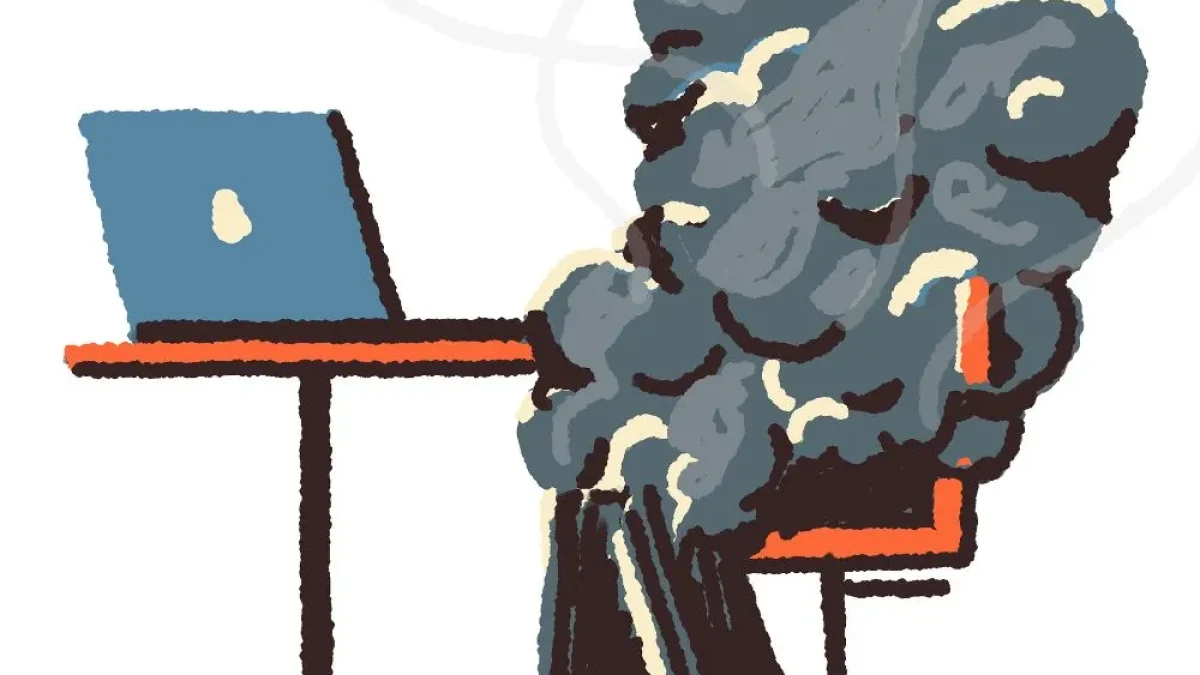
If you have been feeling exhausted, on edge, or quietly disconnected from your own life, you are not alone in wondering what is actually going on underneath it. Burnout, anxiety, and trauma get used almost interchangeably in everyday conversation, yet they come from different places in the brain and body, follow different timelines, and respond best to different kinds of support. Understanding the difference between burnout, anxiety, and trauma is not just a matter of vocabulary. It changes what kind of help you look for and how quickly you start to feel like yourself again.
This guide walks through what separates these three experiences, where they overlap, and how unresolved trauma in particular can quietly shape both your anxiety symptoms and your relationship with work, rest, and other people.
Table of Contents
What Burnout Actually Is
Burnout is not simply “being tired.” Psychologist Christina Maslach defined burnout as a three-dimensional syndrome that develops from prolonged, unmanaged stress on the job, not a personal failing or a lack of resilience (Maslach & Leiter, 2016). It is what happens when the body’s stress response runs for too long without any real chance to reset.
The research behind burnout consistently points to three core dimensions:
- Emotional exhaustion: feeling drained of energy before the day has even started
- Cynicism or detachment: a growing sense of irritability, numbness, or distance from work and the people involved in it
- Reduced sense of efficacy: a creeping feeling that nothing you do is good enough, even when your actual performance has not changed
Burnout tends to land hardest on people who give a great deal of themselves: healthcare workers, teachers, caregivers, and especially perfectionists who tie their sense of worth to performance. If that pattern sounds familiar, it can be worth exploring how trauma shows up in perfectionists, since the drive that fuels chronic overwork is often rooted in something deeper than a heavy workload alone.
What Anxiety Actually Is
Anxiety, on its own, is a normal and even useful part of being human. It is the nervous system preparing you for something that might go wrong. Anxiety disorders are diagnosed when that worry becomes persistent, excessive, and largely disconnected from any one specific event or threat.
Common features of an anxiety disorder include:
- Persistent worry about future events, even ones that are unlikely to happen
- Physical symptoms such as a racing heart, shallow breathing, or a tight chest
- Restlessness or a constant feeling of being “on edge” without an obvious cause
- Difficulty concentrating because the mind keeps scanning ahead for what could go wrong
One of the trickiest parts of identifying anxiety is that it can look almost identical to a nervous system response rooted in trauma. The racing thoughts, shallow breath, and inability to settle can come from a body that is simply wired toward worry, or from a body that once learned that staying alert was the only way to stay safe. If your anxiety feels disproportionate to your current circumstances, or it never fully switches off no matter how calm your life looks on paper, it is worth understanding the difference between hyperarousal and anxiety before assuming it is generalized worry alone.
What Trauma Actually Is
Trauma is fundamentally different from burnout or anxiety because it is rooted in an actual experience, or a pattern of experiences, that overwhelmed your ability to cope at the time (Herman, 1992). This can be a single distressing event, such as an accident or assault, or it can be ongoing exposure such as childhood neglect, chronic criticism, or growing up in an unpredictable home.
According to trauma researcher Bessel van der Kolk, trauma is not really about the event itself. It is about how the nervous system responded to it, and whether that response ever got the chance to complete and settle (van der Kolk, 2014). When it does not, the body can remain locked in survival mode long after the danger has passed. Signs of unresolved trauma often include:
- Hypervigilance, or a near-constant scanning of the environment for threat
- Flashbacks or intrusive memories that feel like they are happening in the present
- Emotional numbness or a sense of being disconnected from your own body
- A freeze response: feeling stuck, foggy, or unable to act even when you want to
Dr. Reshie echoes this distinction during his conversation with Katrina:
“Trauma is not about the event itself. It’s about how the person has internalized what was happening at the time and what happened within them.”
Katrina adds that while some events are more commonly traumatic than others, each person’s nervous system responds differently, making individualized care essential.
Neuroscientist Stephen Porges’ polyvagal theory offers one explanation for why this happens. According to this framework, the nervous system is constantly running an unconscious safety assessment called neuroception, and after trauma this system can become biased toward detecting danger even in safe situations (Porges, 1995). This is also why trauma so often reshapes how people relate to others. If you notice that old wounds keep showing up in how you trust, attach to, or pull away from the people closest to you, this piece on how trauma shapes relationships, identity, and connection goes deeper into that pattern.
Where Burnout, Anxiety, and Trauma Overlap
Part of what makes these three so hard to tell apart is that they share a long list of symptoms. Fatigue, headaches, muscle tension, sleep disturbance, and difficulty concentrating can show up in all three, because all three involve a nervous system under chronic strain. They also feed each other in predictable ways.
- A person with unresolved trauma is more likely to burn out, because their nervous system is already working overtime to manage perceived threat
- Burnout left unaddressed for too long can develop into clinical anxiety or depression
- Trauma very frequently produces anxiety as a secondary symptom rather than a standalone condition
The overlap between trauma and anxiety is well documented. Large-scale research on post-traumatic stress disorder has found extremely high rates of co-occurring anxiety disorders among people with PTSD, with some studies placing that overlap above 80 percent (Kessler et al., 2005). This is part of why people who overachieve, take on more than is sustainable, or struggle to rest even when nothing is demanding it of them are sometimes managing an old trauma response rather than a simple personality trait. It is worth asking honestly whether overachieving is a trauma response before assuming the drive to keep proving yourself is just ambition.
The Key Differences at a Glance
Once the overlap is accounted for, a few clear distinctions remain that can help you sort out what you are actually dealing with.
- Origin: Burnout is tied to a specific, ongoing context such as a job or caregiving role. Anxiety can exist without any clear triggering event. Trauma is always rooted in a past experience the nervous system has not finished processing.
- Time orientation: Anxiety is usually future-focused, anticipating what might go wrong. Trauma tends to pull a person backward, into memories and sensations from the past.
- Response to rest: Burnout often improves, at least partially, with rest, boundaries, or a change in environment. Anxiety and trauma frequently do not, because the issue is not a lack of recovery time but a nervous system that has not learned safety.
- Emotional texture: Burnout tends to show up as numbness and cynicism. Anxiety tends to show up as worry and dread. Trauma tends to show up as a mix of hypervigilance, shame, and disconnection.
Why Childhood Patterns Shape All Three
Many of the patterns that later show up as burnout, chronic anxiety, or trauma symptoms in adulthood can be traced back to childhood. The landmark Adverse Childhood Experiences (ACE) Study found a clear, graded relationship between the number of adverse experiences a person had growing up, such as abuse, neglect, or household dysfunction, and the likelihood of long-term mental and physical health problems in adulthood (Felitti et al., 1998). When a child does not have a consistent sense of safety, the nervous system can become wired toward vigilance as a baseline state rather than an occasional response to real danger.
This early wiring often resurfaces later in the form of workplace struggles. People who learned early on that their value was tied to performance or to keeping others calm frequently carry that pattern straight into their careers, where it can look like ambition on the outside while functioning as a trauma response underneath. Untreated, this dynamic does not stay contained to one area of life. It is worth understanding how untreated trauma affects employment, since the same nervous system patterns driving burnout at work are often the same ones rooted in much earlier experiences.
Signs It May Be Time to Seek Support
None of these conditions are something you have to push through alone, and a mental health professional can help you sort out what is actually driving your symptoms. It is generally a good idea to reach out for support if you notice:
- Symptoms that have lasted for more than a few weeks without improvement
- Exhaustion, worry, or hypervigilance that interferes with work, relationships, or daily functioning
- Reliance on substances, overworking, or other coping mechanisms to get through the day
- A sense of being permanently changed by something that happened, even if it was a long time ago
- Physical symptoms such as chronic pain, digestive issues, or sleep problems with no clear medical cause
How Healing Differs for Each
Because burnout, anxiety, and trauma have different roots, they generally respond best to different approaches, even though there is some overlap in effective treatment.
- Burnout usually improves with structural changes such as boundary setting, workload adjustment, or a shift in role or environment, alongside support for the underlying patterns that led to overextension in the first place
- Anxiety often responds well to Cognitive Behavioral Therapy, which helps identify and reframe the thought patterns that keep worry running on a loop
- Trauma typically needs approaches that engage the body and nervous system directly rather than thought patterns alone. Eye Movement Desensitization and Reprocessing, developed by psychologist Francine Shapiro, helps the brain reprocess traumatic memories so they stop triggering the same fear response (Shapiro, 1989). Somatic and polyvagal-informed therapies work similarly by helping the nervous system relearn what safety actually feels like in the body, not just in the mind
In practice, many people benefit from a blend of these approaches, especially when trauma, anxiety, and burnout are all present at once, which is common rather than rare.
Final Thoughts
Burnout, anxiety, and trauma can look remarkably similar from the outside, and even from the inside, which is exactly why so many people spend years managing the wrong problem. Burnout asks for rest and boundaries. Anxiety asks for help quieting a mind stuck in the future. Trauma asks for something deeper: a nervous system that finally gets the chance to learn it is safe again. Recognizing which one you are actually facing, or which combination of the three, is the first real step toward healing rather than just coping. You can explore more resources on trauma recovery and nervous system healing at livingfree.today.
If any of this feels familiar and you are ready for support that goes beyond generic advice, our team is here to help you find the right path forward. Contact us to talk through what you are experiencing and take the next step toward feeling like yourself again.