

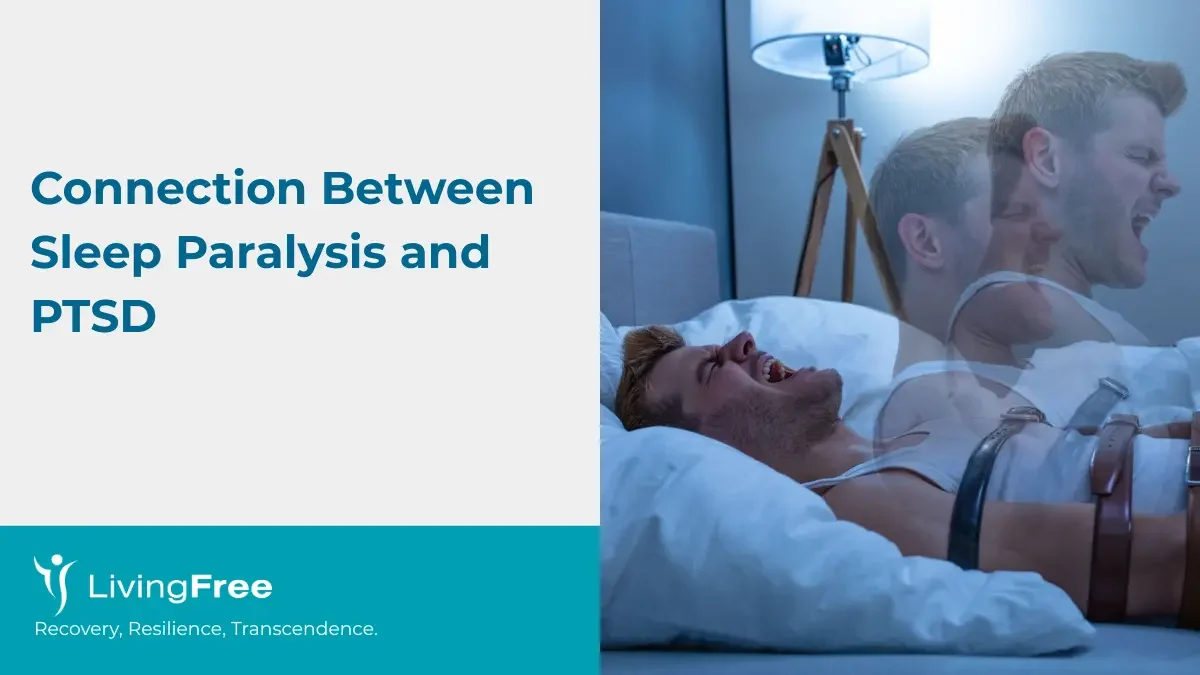
Sleep paralysis is often described as frightening, surreal, and deeply distressing. For many people living with Post-Traumatic Stress Disorder (PTSD), these episodes can feel even more intense, sometimes indistinguishable from trauma-related nightmares or flashbacks. Over the past two decades, research and clinical observations have increasingly pointed to a meaningful connection between sleep paralysis and PTSD.
This article explores how and why these two experiences are linked, what science tells us about their relationship, and why understanding this connection matters for trauma recovery.
What Is Sleep Paralysis?
Sleep paralysis is a temporary inability to move or speak that occurs when falling asleep or waking up. During an episode, the brain becomes conscious while the body remains in a state of REM-related muscle paralysis (atonia). Episodes may last from a few seconds to several minutes and often resolve on their own.
Common features of sleep paralysis include:
- Inability to move or speak.
- Intense fear or panic.
- Pressure on the chest.
- Vivid hallucinations (visual, auditory, or tactile).
- A sensation of being watched or threatened.
Although sleep paralysis itself is not dangerous, the subjective experience can be extremely distressing, especially for individuals with a trauma history.
Understanding PTSD and Sleep Disturbance
PTSD is a trauma-related disorder characterized by symptoms such as:
- Hyperarousal and heightened threat perception.
- Intrusive memories or flashbacks.
- Nightmares.
- Avoidance behaviors.
- Chronic sleep disturbances.
Sleep problems are among the most persistent symptoms of PTSD. Nightmares, insomnia, fragmented sleep, and altered REM sleep patterns are all well-documented features. These disruptions create fertile ground for experiences like sleep paralysis to occur more frequently.
Evidence Linking Sleep Paralysis and PTSD
Higher Prevalence in PTSD Populations
Multiple studies consistently show that people with PTSD experience sleep paralysis at much higher rates than the general population. While lifetime prevalence of sleep paralysis in the general population is often estimated between 7–28%, studies involving trauma-exposed groups report significantly higher numbers.
Research involving refugees, military veterans, firefighters, and survivors of violence demonstrates that:
- Sleep paralysis occurs more frequently in individuals with PTSD.
- Episodes are often more recurrent.
- Severity of PTSD symptoms correlates with frequency of sleep paralysis.
In some trauma-exposed populations, more than half of individuals with PTSD report recurrent sleep paralysis.
Relationship With Symptom Severity
Sleep paralysis is not just more common in PTSD, it often intensifies as PTSD symptoms worsen. Studies show associations between:
- Sleep paralysis frequency and hyperarousal.
- Sleep paralysis and nightmare severity.
- Sleep paralysis and anxiety sensitivity.
This suggests sleep paralysis may be both a consequence and a reinforcing factor within the PTSD symptom loop.
Why PTSD Increases the Risk of Sleep Paralysis?
1. REM Sleep Dysregulation
Sleep paralysis occurs during REM sleep transitions. PTSD is strongly associated with abnormalities in REM sleep, including:
- Increased REM density.
- Frequent awakenings during REM.
- REM fragmentation.
These disruptions increase the likelihood that consciousness returns before muscle paralysis has ended, creating the perfect conditions for sleep paralysis.
2. Chronic Hyperarousal
People with PTSD often remain in a persistent state of physiological alertness. This hyperarousal:
- Makes the brain more likely to awaken abruptly.
- Interferes with smooth sleep-wake transitions.
- Keeps threat-detection systems highly active during sleep.
As a result, sleep paralysis episodes may feel especially threatening and intense.
3. Trauma-Related Hallucinations and Imagery
Sleep paralysis hallucinations often draw from emotional memory rather than random imagery. For trauma survivors, this means:
- Hallucinations may resemble trauma themes
- Sensations can feel similar to past assaults or threats
- The experience may be interpreted as real danger
- This overlap can blur the boundary between nightmares, flashbacks, and waking reality.
Psychological Impact of Sleep Paralysis in PTSD
For individuals without trauma history, sleep paralysis may be frightening but transient. For those with PTSD, it can be profoundly destabilizing.
- Common psychological effects include:
- Fear of falling asleep.
- Increased nighttime anxiety.
- Worsening insomnia.
- Reinforcement of trauma-related beliefs (e.g., “I am not safe”).
In some cases, sleep paralysis itself becomes a secondary traumatic stressor, further entrenching PTSD symptoms.
Cultural and Interpretive Factors
Research also highlights that cultural beliefs influence how sleep paralysis is interpreted. In trauma-exposed populations, episodes may be explained as:
- Supernatural attacks
- External threats
- Loss of control or vulnerability
These interpretations can intensify fear and emotional distress, especially when combined with PTSD-related hypervigilance.
Clinical Implications: Why This Connection Matters
Recognizing the link between sleep paralysis and PTSD is crucial for both clinicians and individuals experiencing it.
Misdiagnosis and Overlooked Symptoms
Sleep paralysis is often dismissed or misunderstood. Without proper context, it may be mistaken for:
- Panic attacks
- Psychotic symptoms
- Dissociative episodes
Understanding its relationship to trauma helps ensure appropriate treatment.
Treatment Approaches
While there is no single treatment specifically for sleep paralysis, addressing underlying PTSD often reduces its frequency and severity.
Effective approaches may include:
- Trauma-focused cognitive behavioral therapy.
- Addressing underlying PTSD symptoms via EMDR or trauma-focused CBT may reduce both nightmares and SP occurrences.
- EMDR or other trauma processing therapies.
- CBT-I (Cognitive Behavioral Therapy for Insomnia).
- Cognitive-Behavioral Therapy (CBT) focused on sleep and trauma can help improve sleep patterns and reduce SP frequency.
- Psychoeducation about sleep paralysis to reduce fear.
Regular sleep schedules, stress reduction, and behavioral sleep strategies are often recommended for SP and PTSD-related sleep disruption.
Improving sleep regulation and reducing hyperarousal are key targets.
Sleep Paralysis Is Not a Sign of Weakness or “Losing Control”
One of the most important messages for trauma survivors is: sleep paralysis is a neurophysiological response, not a personal failure or sign of mental deterioration.
In the context of PTSD, it reflects:
- A nervous system shaped by survival
- A brain that learned to stay alert to danger
- Sleep processes disrupted by trauma, not broken
Final Thoughts
The connection between sleep paralysis and PTSD is well-supported by scientific research and clinical observation. PTSD alters sleep architecture, increases hyperarousal, and intensifies threat perception, all of which raise the likelihood and emotional impact of sleep paralysis.
Understanding this relationship can reduce fear, normalize the experience, and guide more effective trauma-informed treatment. For many survivors, recognizing that sleep paralysis is a known trauma-related phenomenon, not something mysterious or dangerous, can be an important step toward healing. Contact us to learn how trauma-informed care can help you feel safer in your body, at night and during the day.
Related Post: