
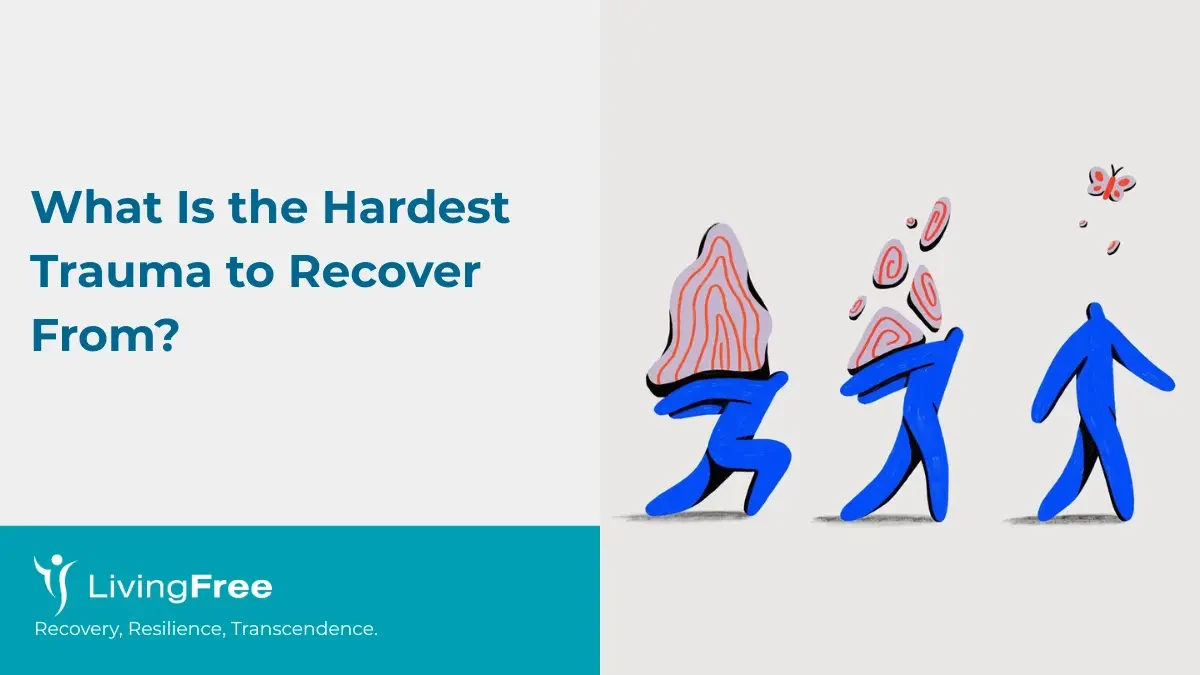
Trauma is not a one-size-fits-all experience. What feels overwhelming for one person may not affect another in the same way. That is why asking “what is the hardest trauma to recover from?” does not have a single, simple answer. Still, patterns from clinical psychology and trauma research suggest that some types of trauma tend to be more complex, deeply rooted, and challenging to heal.
This article brings together insights from psychological research and clinical practice to explore which traumas are often the hardest to recover from, and more importantly, why.
Table of Contents
What Makes a Trauma Hard to Recover From?
Before identifying specific types, it is important to understand what makes trauma difficult in the first place. Research shows that recovery depends less on the event itself and more on factors such as:
- Duration and repetition of the trauma.
- Age at which it occurred.
- Relationship to the person causing harm.
- Level of support after the event.
- Impact on identity, safety, and trust.
Trauma that is repeated, interpersonal, and experienced during early development tends to be the most complex. These factors often shape how a person sees themselves and the world, making recovery more layered.
As one clinician explains in the transcript, trauma is not just about what happened externally, but how it was experienced internally:
“Trauma is a wounding or an injury that happens to somebody… it’s about how the person has internalized what was happening at the time and what happened within them.”
This perspective highlights why two people can go through similar events but have very different recovery journeys.
1. Complex Trauma (Chronic and Repeated Trauma)
One of the most widely recognized forms of difficult trauma is complex trauma, also known as Complex PTSD. This type of trauma develops from prolonged exposure to distressing experiences, often in situations where escape is not possible.
Examples include:
- Ongoing childhood abuse or neglect.
- Domestic violence.
- Long-term emotional manipulation or control.
Unlike a single traumatic event, complex trauma affects emotional regulation, self-worth, and relationships. Survivors often struggle with chronic shame, difficulty trusting others, and feeling unsafe even in stable environments.
This aligns with the idea that repeated exposure can gradually create deep psychological wounds over time:
“It’s the kind of traumas that come from these repeated actions… people are almost aghast to discover that they have trauma.”
To better understand how trauma responses show up in daily life, you can explore how triggers develop and persist in this guide on trauma triggers.
2. Childhood Trauma
Trauma experienced during childhood is often considered one of the hardest to recover from because it occurs during critical stages of brain development.
Children rely on caregivers for safety and emotional regulation. When those caregivers are the source of harm or neglect, it disrupts:
- Attachment and bonding.
- Emotional development.
- Sense of identity.
- Ability to regulate stress.
This early disruption can carry into adulthood, affecting decision-making, relationships, and self-perception. If you want to see how these patterns continue later in life, this article explains how trauma shapes behavior.
3. Betrayal Trauma
Betrayal trauma occurs when the harm comes from someone you depend on, such as a parent, partner, or close friend. This type of trauma creates a deep internal conflict because the person who is supposed to provide safety becomes the source of danger.
This often leads to:
- Difficulty trusting others.
- Confusion about boundaries.
- Suppression or denial of the trauma to maintain the relationship.
Betrayal trauma can be particularly difficult to process because acknowledging it may threaten a person’s sense of stability or belonging.
4. Developmental Trauma
Closely related to childhood trauma, developmental trauma refers to disruptions in early emotional and psychological growth caused by chronic stress, neglect, or inconsistent caregiving.
This type of trauma does not just create painful memories. It shapes how the nervous system develops. As a result, individuals may experience:
- Persistent anxiety or emotional numbness.
- Difficulty forming secure relationships.
- Problems with self-regulation.
Healing often requires more than just talking about past events. It involves working with the body and nervous system. You can learn more about different therapeutic approaches here.
5. Trauma Without Closure (Ambiguous Loss or Unresolved Trauma)
Some trauma is especially difficult because it lacks clear resolution. This includes experiences such as:
- Sudden loss without goodbye.
- Missing persons.
- Unanswered questions after a traumatic event.
Without closure, the brain struggles to process and integrate the experience. This can lead to ongoing rumination, emotional distress, and difficulty moving forward.
6. Interpersonal Trauma vs Single-Event Trauma
Research consistently shows that interpersonal trauma, especially when repeated, is harder to recover from than single-incident trauma such as accidents or natural disasters.
This is because interpersonal trauma:
- Damages trust and relationships.
- Alters core beliefs about safety and self-worth.
- Often involves emotional and psychological harm alongside physical harm.
However, this does not mean single-event trauma is easy to heal. The impact depends on the individual and the context.
Why Eliminating Triggers Is Not Enough
A common misconception is that avoiding triggers will solve trauma responses. In reality, healing involves learning how to process and integrate those experiences, not just avoid them.
This is explored in more depth here: Why Eliminating Triggers Doesn’t Work in Trauma Recovery.
Trauma recovery is not about erasing the past. It is about building the capacity to feel safe in the present.
A More Holistic View of Trauma Recovery
Trauma affects multiple areas of life, not just emotions. Effective recovery often involves addressing different domains such as:
- Physical regulation.
- Emotional processing.
- Cognitive patterns.
- Relationships.
- Meaning and identity.
You can explore this framework in more detail here: The Six Domains of Trauma Recovery: A Pathway to Resilience.
Recovery is rarely linear. It involves setbacks, progress, and learning new ways to relate to yourself and others. As one perspective emphasizes, life events cannot always be controlled, but healing is still possible: The “Shit Happens” Model: Building Real Trauma Resilience.
Conclusion
There is no single “hardest” trauma, but patterns show that repeated, interpersonal, and early-life trauma tend to be the most complex to heal. Understanding this can shift the focus from comparison to compassion. Healing is not about ranking pain, but about recognizing what your system has been through and what it needs now.
If you are navigating trauma recovery, you do not have to do it alone. At Living Free, we support individuals through a trauma-informed approach that addresses both mind and body. Learn more at Living Free and consider reaching out to contact us for guidance tailored to your journey.