
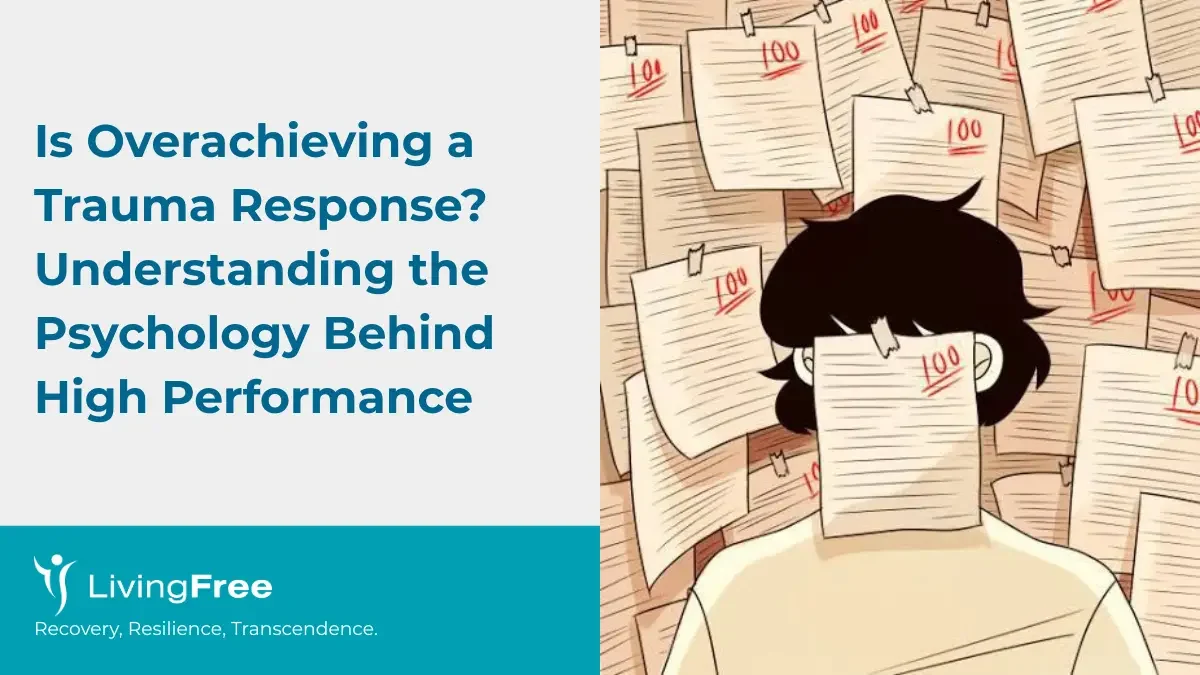
Overachieving is often seen as a positive trait. It is associated with success, discipline, and ambition. But beneath the surface, not all overachievement comes from a healthy place. For some people, the constant drive to perform, succeed, and exceed expectations can actually be rooted in unresolved trauma.
So, is overachieving a trauma response? The answer is not always, but in many cases, it can be. Understanding the difference can help you build a healthier relationship with success, productivity, and self-worth.
Table of Contents
What Is Overachieving?
Overachieving refers to consistently performing beyond expectations, often setting extremely high standards for yourself. While it may lead to recognition and accomplishments, it can also come with internal pressure that never seems to turn off.
Some people overachieve because they genuinely enjoy growth and challenge. Others do it because they feel they have to.
This distinction matters. When overachievement is driven by fear, insecurity, or past emotional wounds, it can become exhausting rather than fulfilling.
Is Overachieving a Trauma Response?
Yes, overachieving can be a trauma response, especially in individuals who have experienced emotional neglect, criticism, instability, or conditional love.
Trauma affects how the brain and nervous system respond to safety and threat. Instead of shutting down, some people adapt by becoming highly functional. They stay busy, productive, and successful as a way to feel safe, valued, or in control.
In this context, overachieving is not just about success. It is about survival.
Why Trauma Can Lead to Overachievement
There are several psychological mechanisms that explain why trauma and overachievement are often connected. These patterns develop as coping strategies, even if they later become overwhelming.
A Need for Control
When someone experiences trauma, especially situations where they feel powerless, the brain tries to regain a sense of control. Overachieving becomes a way to create structure and predictability.
By excelling in work, academics, or personal goals, individuals may feel they can prevent chaos or avoid negative outcomes. It gives the illusion that if everything is done perfectly, nothing bad will happen.
Conditional Self-Worth
Many people who overachieve learned early on that their worth depended on their performance. Praise, love, or acceptance may have been tied to success rather than simply being who they are.
This creates a pattern where self-worth is never stable. It must constantly be earned. This is closely related to shame-based patterns discussed in Shame and Trauma (Guilt and Self-Blame): Why It Lingers Even When the Event Is Over.
Over time, achievement becomes less about joy and more about avoiding feelings of inadequacy.
Perfectionism and the Inner Critic
Overachieving is often fueled by perfectionism. There is a strong fear of making mistakes, being judged, or not being good enough.
This is usually reinforced by a harsh internal voice that constantly pushes for more. Even when success is achieved, it rarely feels like enough.
If this feels familiar, it may be connected to the patterns explained in The Inner Critic After Trauma: Where It Comes From and How Therapy Helps.
Instead of motivation, the driving force becomes self-criticism.
People-Pleasing and Fear of Rejection
In some cases, overachieving develops as a way to maintain relationships and avoid conflict. Success becomes a tool to gain approval and reduce the risk of rejection.
People may go above and beyond expectations, not because they want to, but because they feel they have to in order to be accepted.
This dynamic overlaps with what is explored in People-Pleasing, Avoidance, and the Fear of Conflict.
Here, achievement is tied to emotional safety in relationships.
Signs Your Overachievement May Be Trauma-Driven
Not all overachieving is unhealthy. However, there are clear signs that it may be rooted in trauma rather than passion or purpose.
- You feel anxious or guilty when you are not being productive. Instead of enjoying rest, you may feel uncomfortable or even unsafe when you slow down. Your mind may tell you that you are wasting time or falling behind.
- Your self-worth depends on your achievements. You may feel valuable only when you succeed. When you do not meet your own expectations, your self-esteem drops quickly.
- You struggle to feel satisfied with your accomplishments. Even after achieving something significant, the sense of satisfaction is short-lived. There is always another goal to chase.
- You fear failure intensely. Mistakes may feel catastrophic rather than normal. This fear can lead to overworking, overpreparing, or avoiding risks altogether.
- You experience burnout but keep pushing. Even when you are physically or emotionally exhausted, you find it difficult to stop. Rest may feel like weakness instead of a necessity.
Each of these signs points to a deeper pattern where achievement is tied to emotional regulation and safety, not just success.
The Nervous System and High Functioning Trauma
Trauma impacts the nervous system in different ways. Some people respond by shutting down, while others become hyperactive and highly productive.
Overachieving is often linked to a prolonged state of activation, sometimes referred to as a “fight or flight” response. The body stays alert, focused, and driven, but it rarely feels at ease.
This is why many high achievers experience cycles. They may go through periods of intense productivity followed by burnout or emotional crashes.
This pattern often involves disconnecting from internal signals in order to keep functioning. As Katrina explains, “I was very much unconsciously… led by my mind and my body started giving me signals… stress… and I just powered through and I pushed through.”
This illustrates how overachievement can become less about growth and more about overriding distress.
If you have noticed this pattern, it may relate to the ideas discussed in Why Symptoms Fluctuate During Healing.
These fluctuations are not random. They reflect how the nervous system tries to regulate itself.
Long-Term Effects of Trauma-Driven Overachievement
While overachieving can bring external rewards, the internal cost can be significant if it is driven by unresolved trauma.
- Chronic stress and burnout. Constant pressure can lead to long-term fatigue and difficulty recovering energy.
- Anxiety and emotional exhaustion. The mind may never fully relax, leading to ongoing tension and worry.
- Difficulty experiencing joy. When life becomes focused on performance, it can be hard to feel genuine happiness or fulfillment.
- Identity tied to productivity. You may struggle to know who you are outside of what you achieve.
- Strained relationships. Overworking or people-pleasing can make it difficult to maintain balanced and authentic connections.
These effects often build slowly, making them easy to overlook until they become overwhelming.
Healing: Letting Go of Survival-Based Achievement
Healing does not mean losing your ambition or becoming less capable. It means changing the reason behind your drive.
Instead of being pushed by fear or self-criticism, you can begin to act from a place of self-worth and balance.
Trauma responses are not random. They are protective adaptations shaped by past experiences. As Katrina describes, “trauma is a wounding or an injury… it’s about how the person has internalized what was happening and what happened within them.”
Overachievement, in this sense, can function as a protective strategy to avoid deeper emotional pain or vulnerability.
This process often involves unlearning common misconceptions about healing, which are explored in Common Trauma Healing Myths That Keep People Stuck.
Recovery is not about doing more. It is about relating to yourself differently.
Conclusion and Final Thoughts
Overachieving is not always a trauma response, but it can be. When success becomes tied to survival, self-worth, or emotional safety, it often reflects deeper patterns shaped by past experiences. Recognizing this is not about labeling yourself. It is about understanding what is driving you and giving yourself the option to choose a different path.
If you are starting to question your relationship with achievement, you do not have to figure it out alone. Visit Living Free to explore more resources, or contact us to begin your journey toward a healthier and more sustainable way of living.