
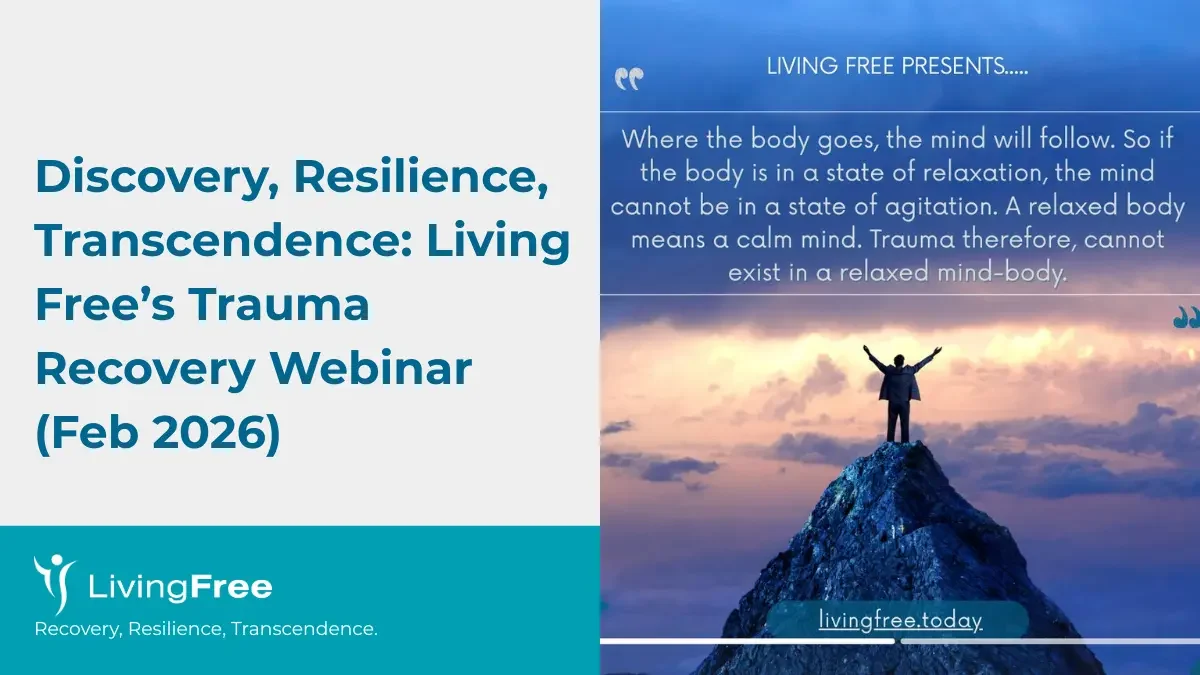
On Sunday, 22 February 2026, Living Free will host a special memorial webinar introducing a structured, clinically grounded model for understanding and recovering from trauma and chronic stress.
Titled “Discovery, Resilience, Transcendence: A Recovery Method for an Exhausted World,” this three-hour session presents the Allostatic Stress-Diathesis model developed by Dr. Reshie Joseph. The framework reframes how we understand triggering, stress disorders, and long-term psychological resilience.
This is not a motivational seminar.
It is a clinical deep dive into how trauma works, and how recovery becomes possible.
Table of Contents
Why This Webinar Is Timely
Across the world, people are reporting:
- Chronic nervous system activation
- Emotional reactivity that feels disproportionate
- Exhaustion without a clear cause
- Intrusive memories
- Difficulty resting or feeling safe
- Struggles in close relationships
Many assume these symptoms mean something is “wrong” with them.
But trauma is not simply about what happened. As explored in What Trauma Really Is: Why It’s Not About What Happened, trauma is fundamentally about how the nervous system adapts to stress and threat.
When stress becomes chronic, the body recalibrates. The system learns survival patterns. Over time, these adaptations can become persistent.
This webinar explains that recalibration in detail.
The Allostatic Stress-Diathesis Model: A Different Way of Understanding Trauma
Traditional models often describe trauma in terms of diagnosis and symptom clusters. The Living Free model goes deeper.
The Allostatic Stress-Diathesis framework examines:
- Baseline nervous system load
- Biological and psychological vulnerability factors
- Cumulative stress exposure
- Trigger activation patterns
- Long-term adaptation responses
It answers critical questions:
- Why do some people develop trauma symptoms while others do not?
- Why do triggers persist even when life becomes stable?
- Why does relaxation sometimes feel unsafe?
- Why does healing often fluctuate?
This model integrates nervous system science, psychology, and long-term stress physiology.
If you have read Why Eliminating Triggers Doesn’t Work in Trauma Recovery, this webinar expands that idea into a complete clinical system.
Eliminating triggers is not the solution.
Understanding system load is.
From Hyperarousal to Resilience
One of the most misunderstood trauma patterns is hyperarousal. It is a persistent state of internal activation that often feels like anxiety but runs deeper.
If you have experienced:
- Heightened startle response
- Irritability or sudden anger
- Difficulty sleeping
- Restlessness
- A constant sense of being “on edge”
You may recognize these patterns from Are You Experiencing Hyperarousal.
The webinar explains why hyperarousal is not a character flaw, not a lack of discipline, and not simply anxiety.
It is often an allostatic response, the nervous system’s attempt to survive cumulative stress exposure.
More importantly, the session explains how this activation can be reduced in a structured and measurable way.
Can You Truly Become “Un-Triggerable”?
The webinar makes a clear claim.
Yes, it is possible to permanently reduce triggering.
This does not mean eliminating emotion.
It does not mean suppressing memory.
It does not mean avoiding stress.
It means increasing system capacity.
Living Free teaches that resilience is not toughness. It is capacity, the ability to hold stress without collapse or dysregulation.
When capacity expands:
- Triggers lose intensity
- Emotional swings stabilize
- Recovery time shortens
- Rest becomes safer
- Identity shifts from survival to grounded presence
This is what Living Free calls transcendence.
What You Will Learn in the Three-Hour Session
Participants will gain:
- A detailed explanation of the Allostatic Stress-Diathesis model
- A clear map of how trauma develops and persists
- Insight into nervous system load and capacity
- Clinical principles used in Living Free practice
- A structured roadmap toward recovery
This is the first time this method is being taught in an accessible public format.
Complimentary Clinical Manual
For this inaugural memorial webinar, participants will receive a fully referenced clinical companion manual at no additional cost.
The manual includes:
- Theoretical framework
- Clinical mapping tools
- Recovery principles
- Practitioner-level insights
This is the same structured system used within Living Free practice.
Webinar Schedule (SGT)
Friday, 20 February 2026
Sales close at 5:00 PM SGT
Sunday, 22 February 2026
1:30 PM – Registration and announcements
2:00 PM – 5:00 PM – Memorial Webinar Session
5:00 PM – 5:30 PM – Selected Q&A and close
Who Should Attend?
This webinar is designed for:
- Individuals experiencing chronic stress or trauma symptoms
- Those who feel stuck despite therapy
- Healthcare professionals exploring integrative trauma models
- Family members seeking deeper understanding
- Anyone interested in resilience beyond symptom management
No professional license is required.
No prior training is necessary.
A Memorial Event with Clinical Significance
This session honors Julie Ward and Chris Walsh and marks a pivotal moment for Living Free: the public teaching of a trauma recovery model developed over a decade of clinical work.
It reflects Living Free’s mission:
To bring structure to trauma.
To reduce confusion around symptoms.
To expand human resilience.
To move from survival to transcendence.
Registration
Registration closes Friday, 20 February 2026 at 5:00 PM SGT.
If you are ready to understand trauma at a structural level, not just manage symptoms, this webinar offers a rare opportunity.
Secure your place before registration closes.